How to Keep Chicken Water Cleaner for Longer (12 Simple Tricks That Work)
Welcome! This article contains affiliate links, meaning I get a commission if you decide to make a purchase through my links, at no extra cost to you.
Keeping chicken water clean can feel like a losing battle. You fill the waterer in the morning and by the afternoon there’s dirt in it, feed floating on top, and a feather or two for good measure.
While you’ll never stop chickens making a mess completely, there are a few simple tricks that can dramatically reduce how often you need to clean and refill their waterers.
Here’s what works.
1. Raise the Waterer Off the Ground
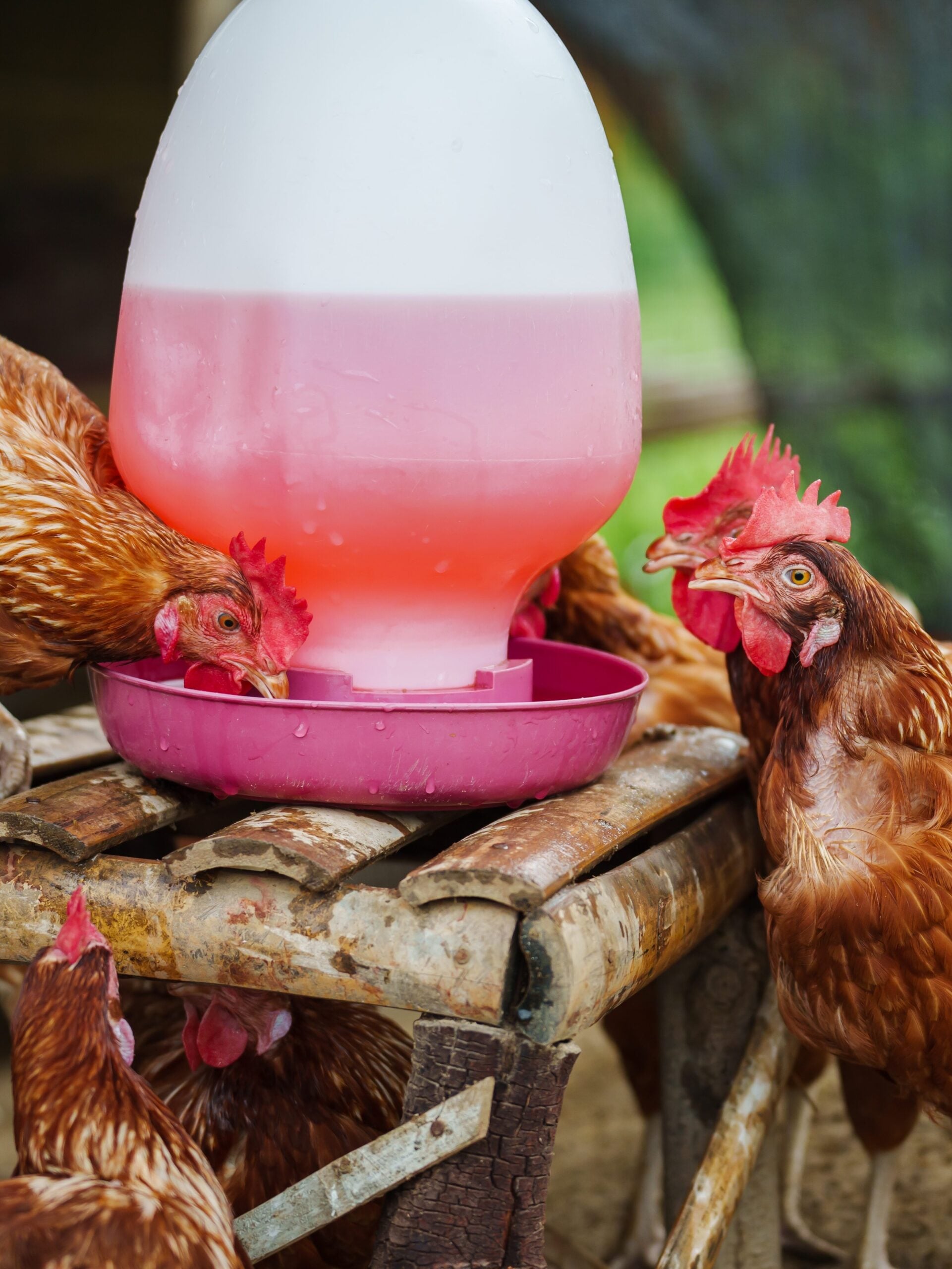
This is the best place to start. A waterer sitting directly on the ground is basically an invitation for chickens to fill it with dirt. Every time they scratch, bits of bedding, dust, feed, and manure end up in the water.
Even lifting it onto a paver or a couple of bricks can make a noticeable difference. Try to keep the drinking lip around the height of your chickens’ backs. They can still drink comfortably, but they’re much less likely to kick rubbish into it.
2. Move Feeders Away From Waterers
Chickens love a drink with their feed, which means they’ll fill the waterer with food if the two containers are too close together. It can help to seperate them so your hens swallow their food before dropping it in the water. Even a few feet can help.
3. Put Waterers in the Shade
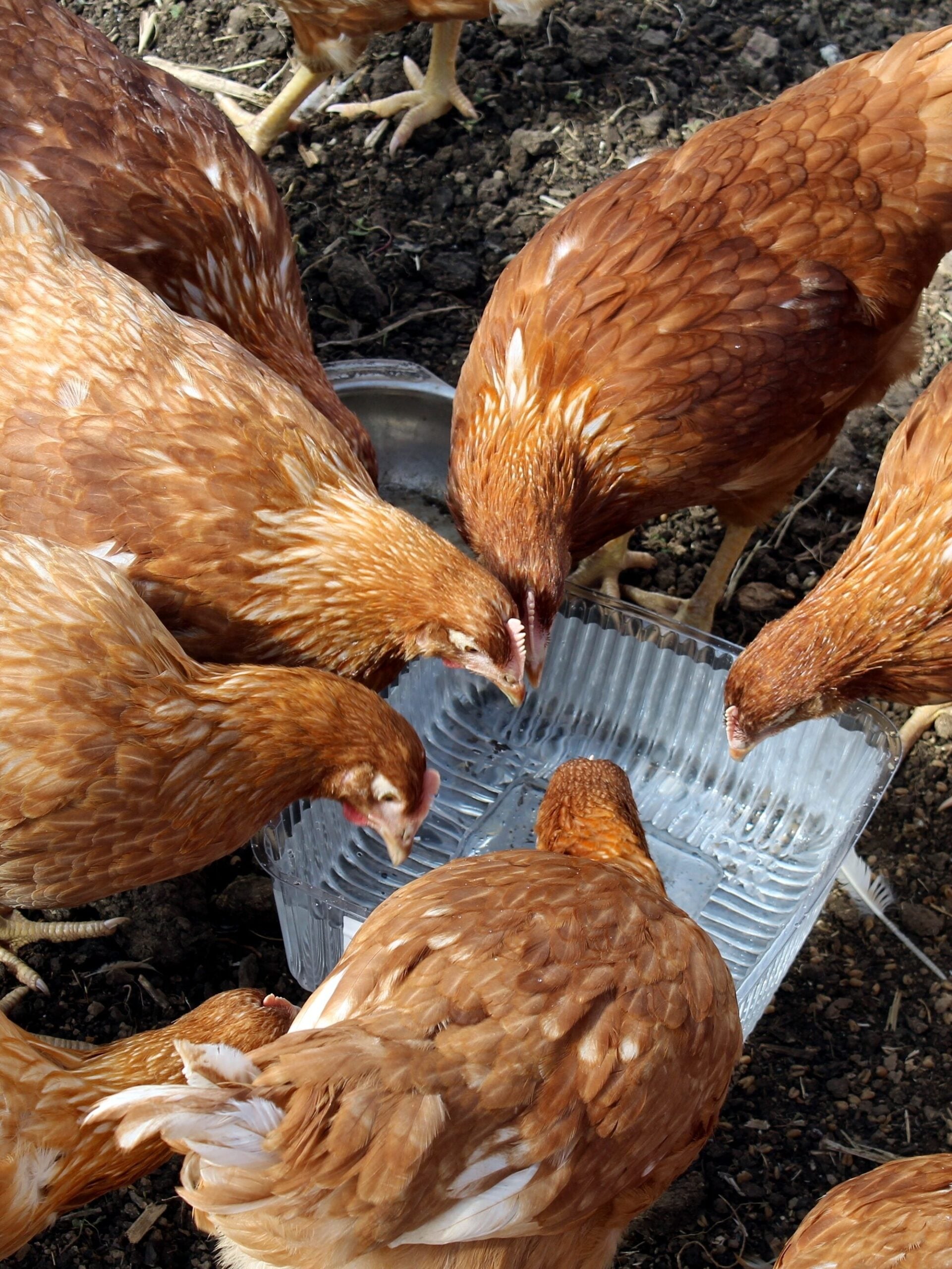
If you’re constantly dealing with green slime, sunlight is often part of the problem. Water that sits in full sun warms up quickly, especially during summer. Algae loves warm water. This is a huge issue in my tropical climate! Every white bucket is covered in green, and it’s hard to get off.
A shady spot can slow algae growth and keep the water cooler for your chickens as well. Under a tree (although this does have the issue of leaves dropping in), inside a covered run, or beneath a small shelter all work well.
4. Use a Waterer With a Smaller Drinking Area
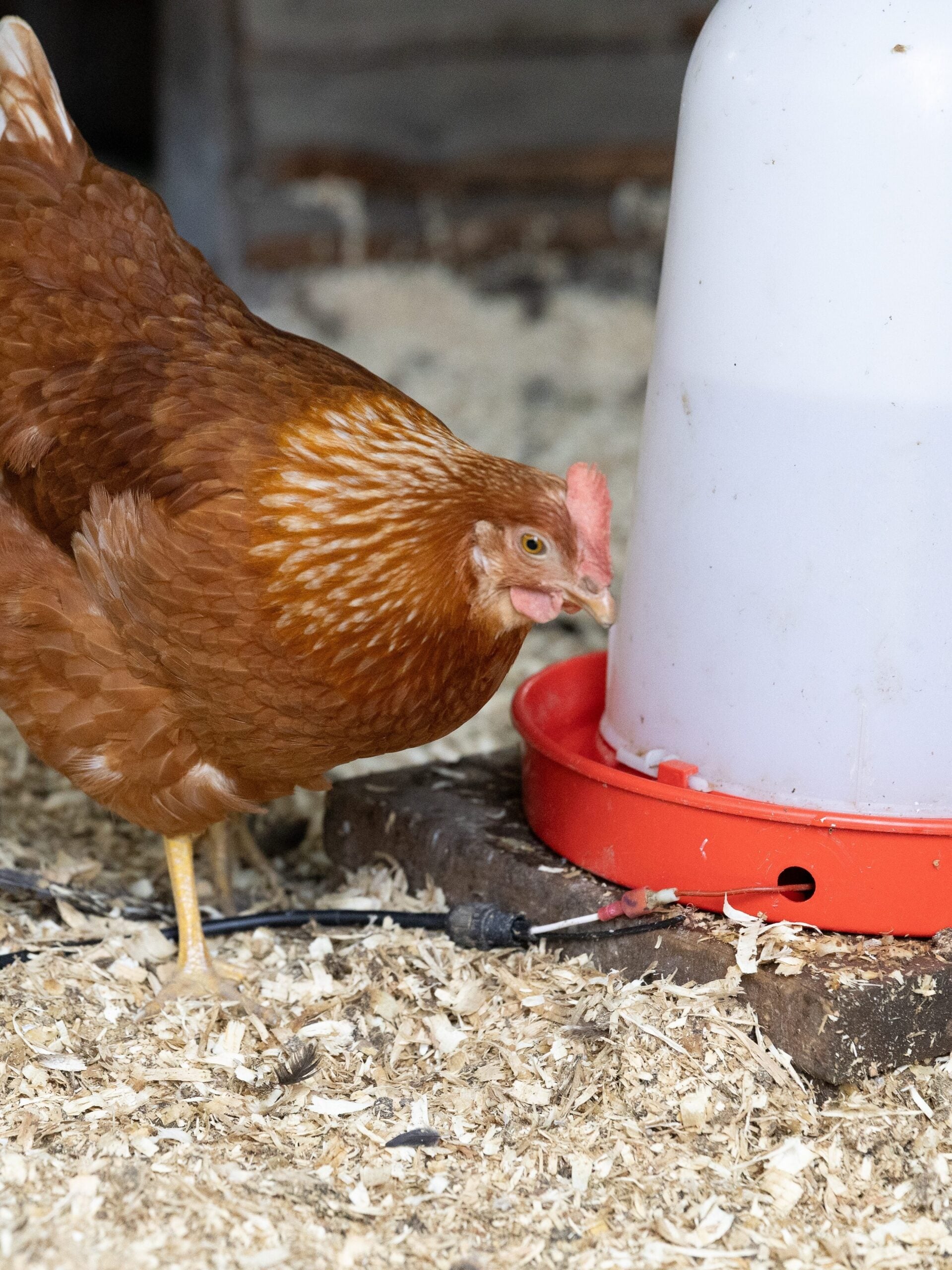
Open bowls are easy for chickens to drink from, but they’re also easy to fill with dirt. I use a lot of buckets, but my girls will perch on the side of the bucket to have a drink, which means the dirt falls right in.
Waterers with a narrower drinking channel stay cleaner because less debris can get inside. This is one reason traditional poultry waterers usually stay cleaner than open tubs or buckets.
5. Try Poultry Nipples

Some chicken keepers love nipple waterers. Others prefer traditional waterers. Either way, there’s no denying that nipple systems do a great job of keeping water clean.
The water stays inside a closed bucket or container, so dirt, bedding, feathers, and manure have a much harder time getting into it. There can be a learning curve while chickens figure them out, but most birds catch on quickly.
6. Use a Drip System
I’ve recreated a similar setup to the poultry nipple by hanging a garden hose inside their run, which is set to a slow drip. My girls love pecking at the drops that come out, and the water is always clean.
It can be a bit tricky to adjust the flow so you’ve got the perfect drop increments without wasting water, but I feel it’s a neat solution. I can also move it when the ground underneath becomes too muddy.
7. Don’t Wait Until the Water Looks Dirty
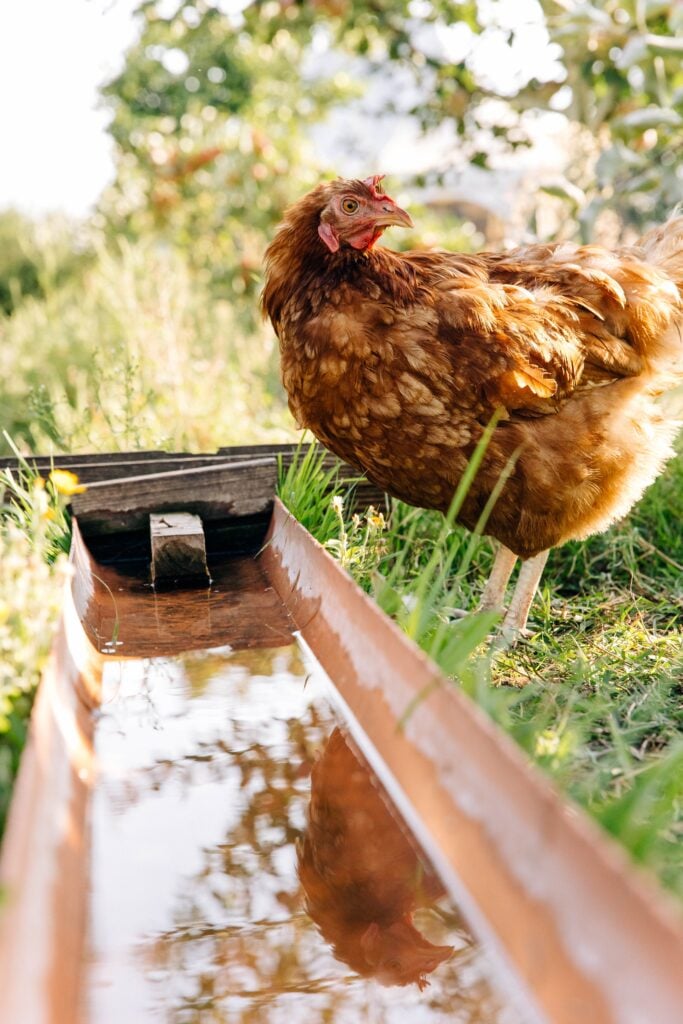
One thing I’ve noticed over the years is that water can look clean long after it stops being clean. Run your finger around the inside of a waterer and you’ll often find a slippery film starting to build up.
That slime, called biofilm, can harbor bacteria and gets harder to remove the longer it’s left. A quick scrub every few days is much easier than trying to remove a thick layer later.
8. Put Waterers on Something That Drains Well
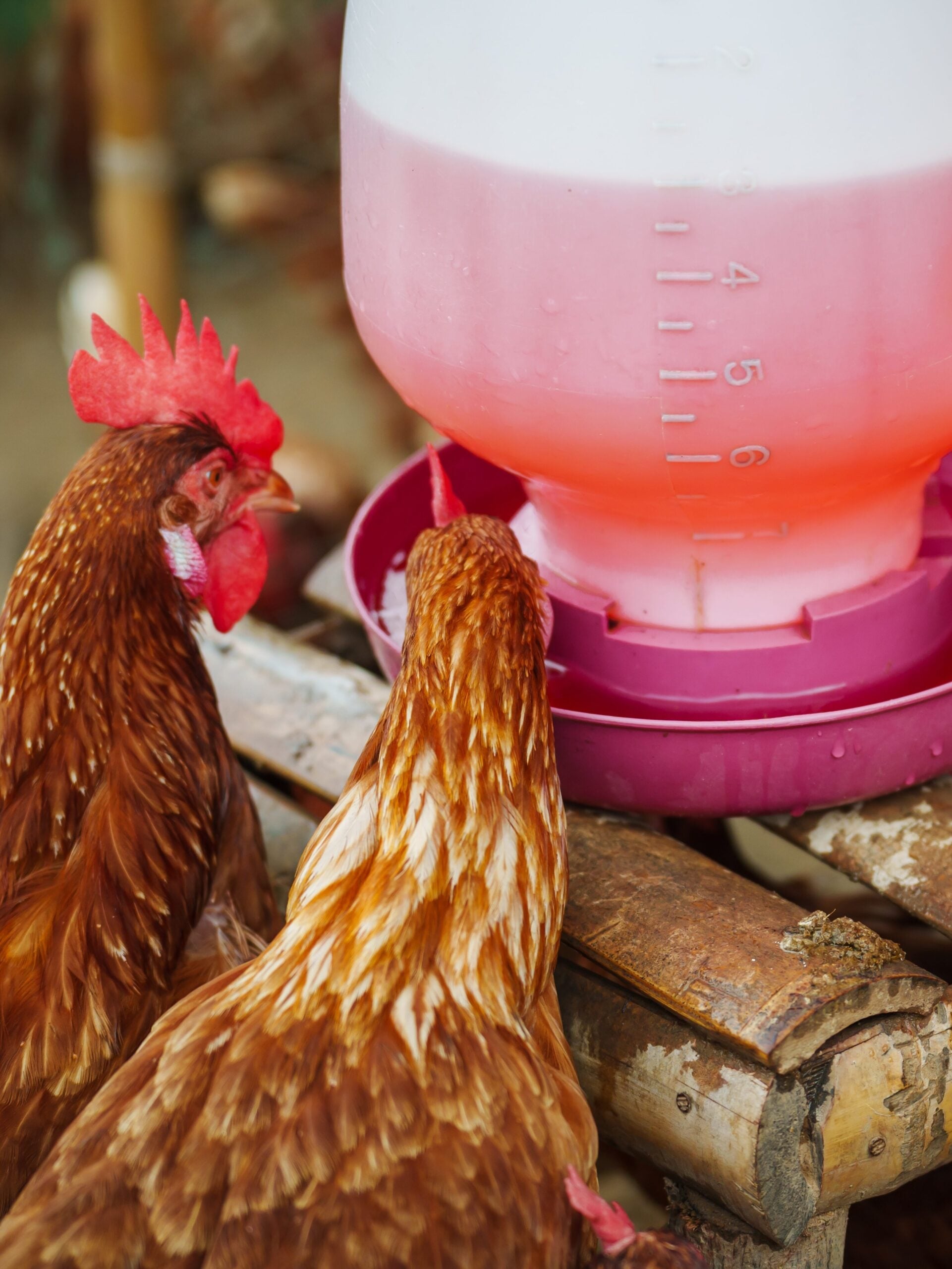
This works well to keep the area around the waterer cleaner. If it’s sitting in a muddy patch, chickens will constantly walk through the mud and flick it straight back into the water. The wetter the area gets, the worse the problem becomes.
A few pavers, some gravel, crusher dust, or even coarse sand can help keep the area drier and cleaner. I’ve put a wooden pallet underneath my drip system, which almost acts like a door mat.
9. Use More Than One Watering Station
If you have a larger flock, crowding around a single waterer can create a surprising amount of mess. Basically, more birds in one spot equals more mess.
Adding a second waterer often helps keep things cleaner while also making sure lower-ranking hens get a chance to drink without being chased away. I like to place containers all over their free-ranging area, but it does mean more cleaning!
10. Keep Wild Birds Out If You Can
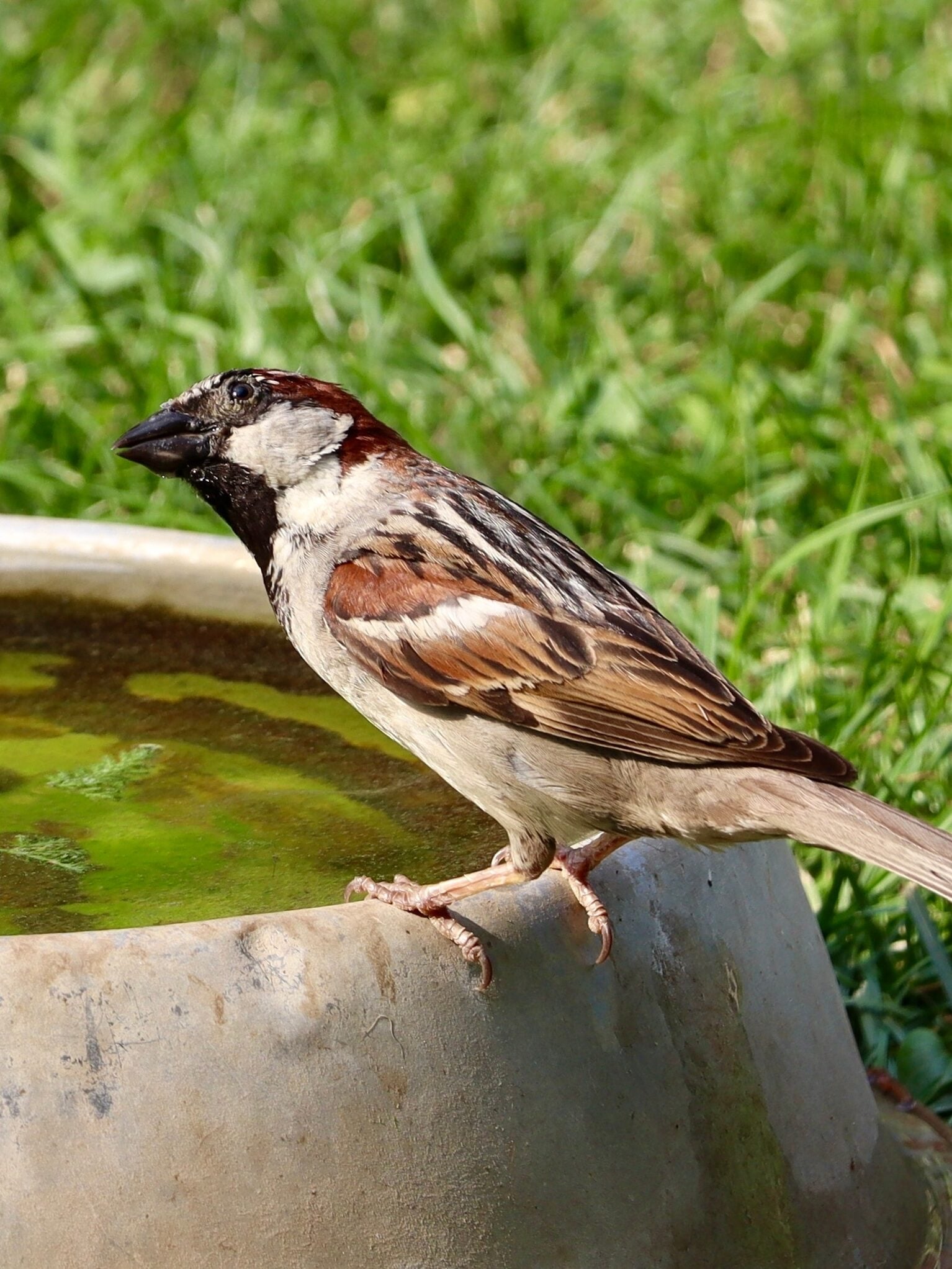
Wild birds love chicken waterers. I have tiny finches and other birds coming in for a swim every day! Unfortunately, they can leave droppings behind, introduce parasites, and add extra debris to the water.
If your chickens are in a covered run, you’ll already be reducing a lot of that risk. Free-range flocks are a little harder to manage, but keeping waterers under cover can still help discourage unwanted visitors.
11. Refresh Water More Often During Hot Weather
Chicken water seems to get dirty twice as fast during summer. The water warms up, algae grows faster, and chickens drink more frequently.
During very hot weather, I usually find it’s worth refreshing the water more often, even if it doesn’t look too bad yet. The chickens seem to appreciate cooler water as well!
12. Consider an Automatic Watering System
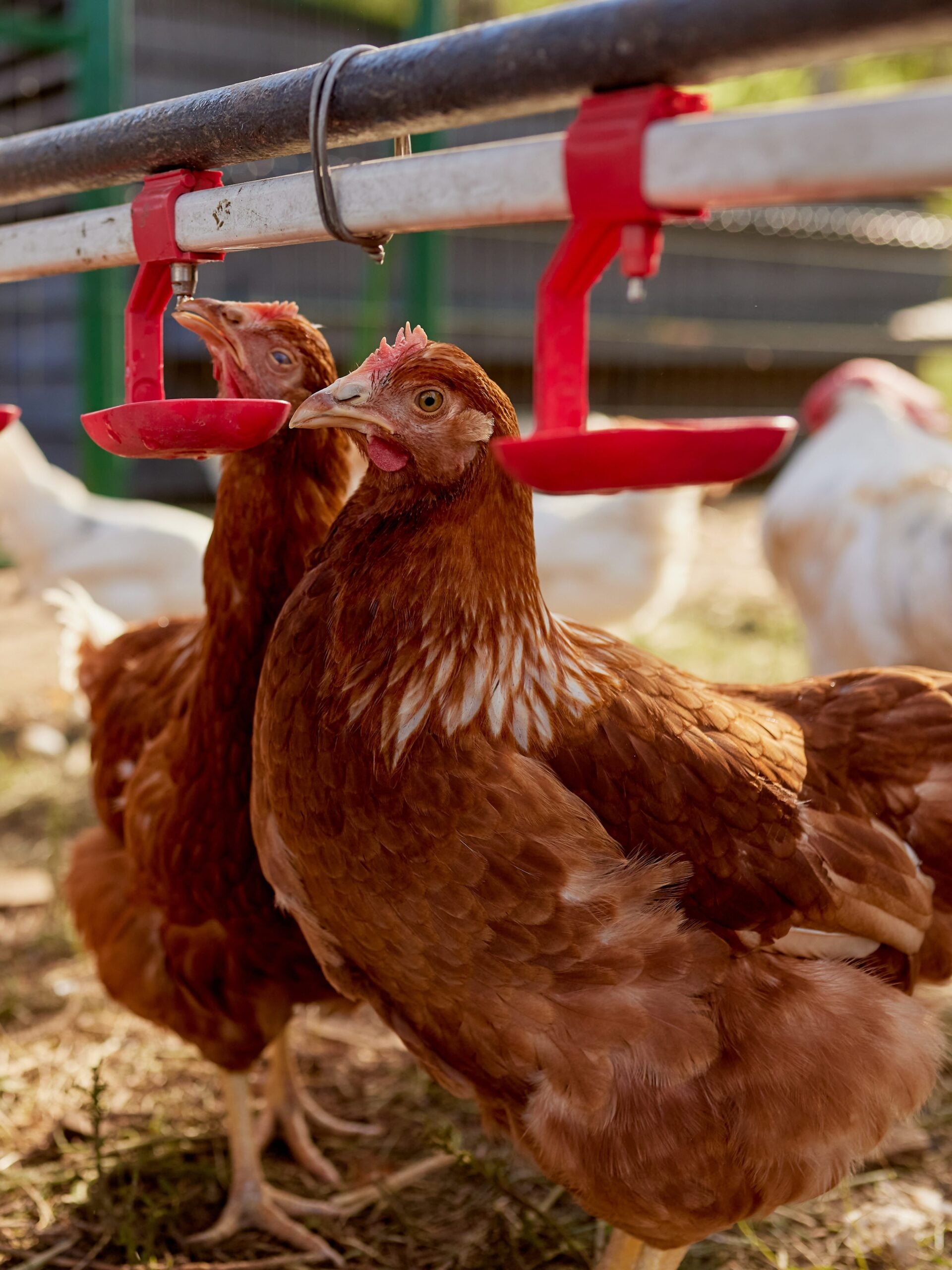
If you’re constantly cleaning and refilling waterers, an automatic system might be worth looking into. Many connect directly to a bucket, tank, or water supply and provide fresh water through cups or nipples.
They’re not necessary for everyone, but they can save a lot of time, especially with larger flocks. The biggest advantage is that the water stays enclosed instead of sitting open to every bit of dirt and dust the chickens can find.
Although, in saying that, I have an automatic waterer in the coop, and it needs a lot of cleaning. It’s an open bowl style which was originally for the horses but repurposed for the chickens. They still manage to get a lot of dirt in, and the thing with automatic waterers like this is that the dirty water sits there until the level drops low enough for it to fill again.
Still needs cleaning!
13. Accept That Chickens Will Always Be Chickens
This might sound obvious, but it’s worth mentioning. No matter how good your setup is, chickens will still find ways to make a mess of your beautiful clean water. The goal isn’t perfectly spotless water twenty-four hours a day. The goal is reducing how quickly it becomes dirty and making your life easier.
A few small improvements can mean cleaning waterers every few days instead of every day. That’s usually good enough for most backyard flocks.
Chicken Water FAQ
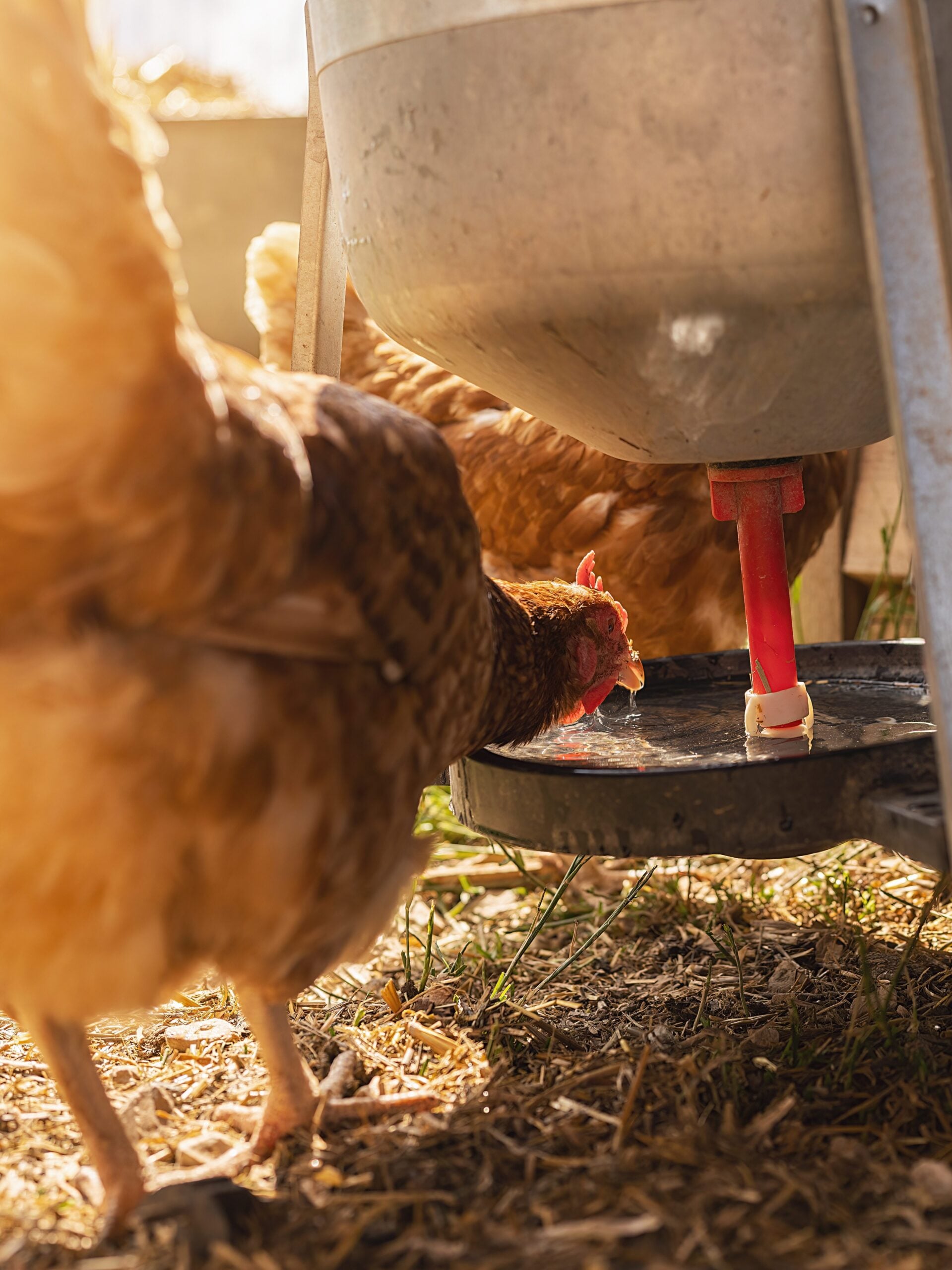
Mostly because of how chickens behave.
They scratch constantly. They dig. They flick bedding around. They eat, drink, scratch some more, and then stand in places that make no sense whatsoever.
Many chickens will also drink, then immediately scratch beside the waterer, kicking dirt straight into it.
It’s not deliberate. They’re just being chickens.
They probably will.
That doesn’t mean they should.
Dirty water can contain manure, bacteria, algae, parasites, and all sorts of things you’d rather not have your flock drinking.
Fresh, clean water is one of the easiest ways to support good health, egg production, and overall wellbeing.
Check it every day.
How often it actually needs changing depends on your weather, flock size, waterer type, and setup.
In cooler weather, you might get away with a few days between thorough clean-outs.
In hot weather, daily changes are often best.
If the water looks dirty, smells off, has algae growing in it, or contains droppings, change it immediately.
Many chicken keepers add small amounts of apple cider vinegar to their flock’s water.
While it’s a popular practice, it won’t magically keep water clean or prevent algae growth.
If you do use apple cider vinegar, avoid metal containers unless they’re specifically designed for it, as the acidity can react with some metals.
Always provide fresh, clean water regardless of whether you’re adding supplements.
For pure cleanliness, nipple waterers are hard to beat.
Because the water stays enclosed, far less dirt, bedding, and manure ends up in it.
That said, a traditional poultry waterer raised off the ground and cleaned regularly can also work extremely well.
The best option is the one that suits your flock and that you’ll actually maintain.
Conclusion
Keeping chicken water clean can feel like a job that goes on forever, but a few simple changes can make a big difference. Try raising the waterer off the ground, moving it into the shade, keeping it away from feeding bowls, and cleaning it before slime builds up. Those simple steps will solve most problems.
You probably won’t eliminate dirty water completely. Chickens will be chickens and perfectly clean water all of the time is pretty much impossible! It’s more about trying to make the job as easy as possible for you.

Fill your garden with fresh vegetables and your kitchen with homegrown food. This heirloom seed collection includes 32 popular varieties, from tomatoes, cucumbers, and lettuce to pumpkins, corn, beans, and carrots. It's an easy way to start a productive vegetable garden, grow more of your own food, and enjoy harvests that taste far better than store-bought produce. Perfect for anyone dreaming of a backyard packed with fresh vegetables!