
How to Grow Cucumbers Vertically: Save Space and Harvest More
Welcome! This article contains affiliate links, meaning I get a commission if you decide to make a purchase through my links, at no extra cost to you.
If you’ve ever grown cucumbers without a trellis, you know what happens. One plant turns into a sprawling tangle of vines that creeps across pathways, climbs through neighboring vegetables, and somehow manages to hide cucumbers until they’re the size of baseball bats.
That’s one reason I prefer growing cucumbers vertically.
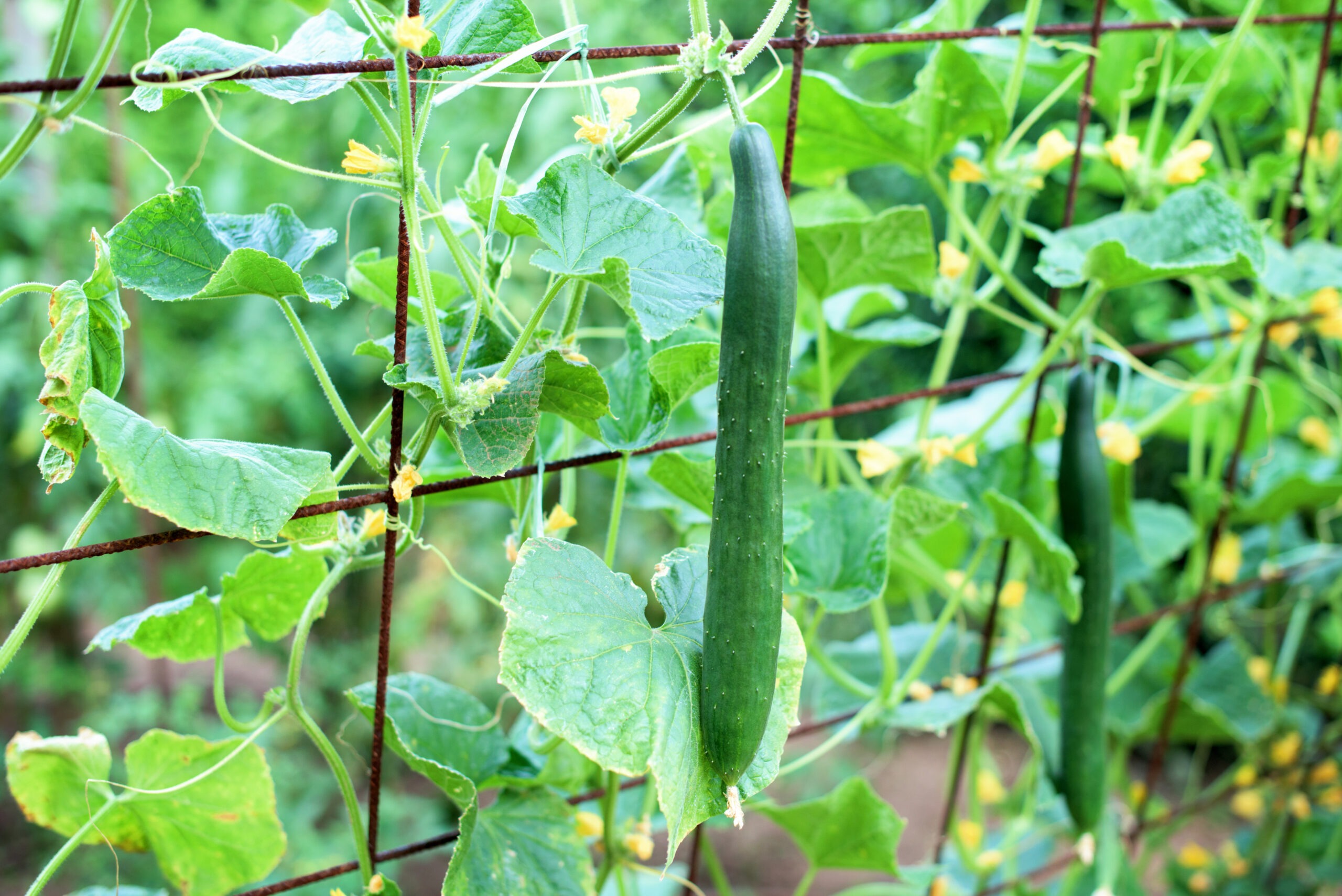
A simple trellis keeps the vines under control, makes harvesting easier, and frees up valuable garden space. It also helps keep the fruit cleaner and can reduce some of the disease problems that come from leaves and cucumbers sitting on damp soil.
After growing cucumbers both ways, I’d choose vertical growing every time. Once you’ve spent a season harvesting clean cucumbers at waist height instead of crawling through a jungle of vines, it’s hard to go back.
Can You Grow Cucumbers Vertically?
Yes, and most cucumber varieties do extremely well when you grow them on a trellis or support.
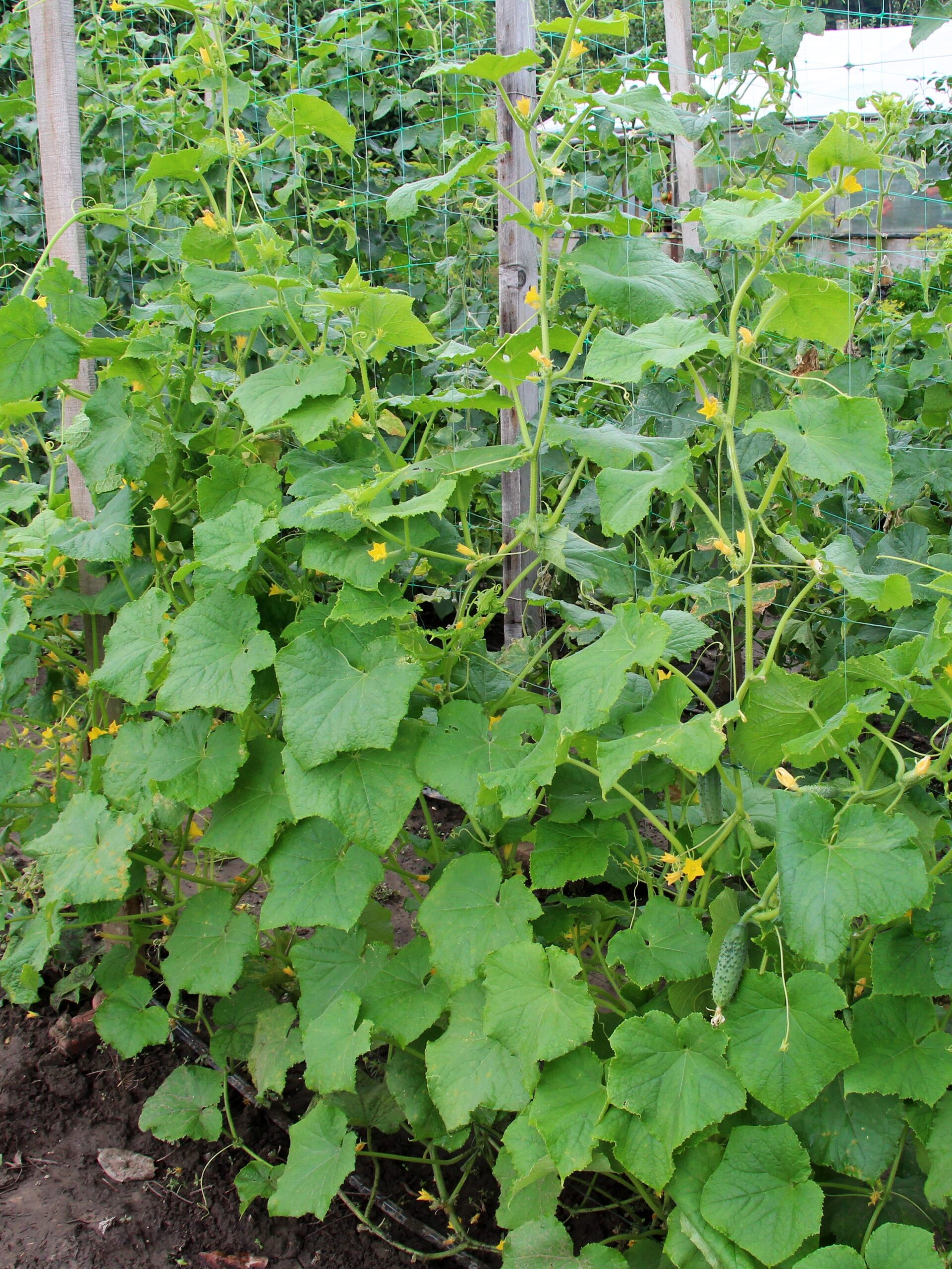
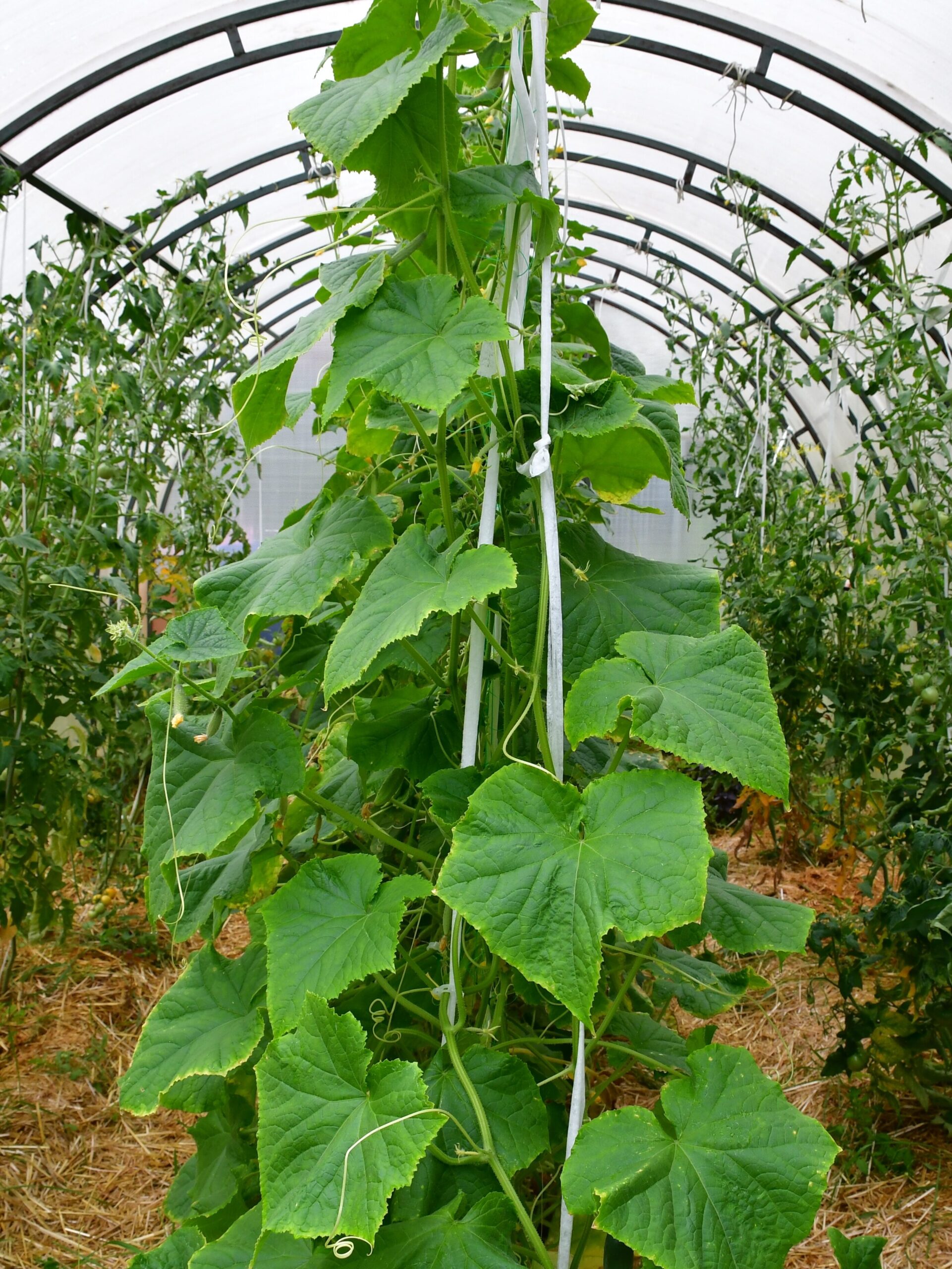
Cucumbers naturally climb using curling tendrils. Give them a fence, trellis, netting, or wire panel and they’ll quickly start growing their way up with very little help from you. In fact, if you don’t provide them with support, they’ll often find their own!
Growing cucumbers vertically works in traditional garden beds, raised beds, container gardens, and small backyards where space is limited.
Is Growing Cucumbers Vertically Better?
In my opinion, yes!
Cucumbers naturally want to climb. Give them something to grab onto and they’ll happily head up and up. Let them sprawl and they’ll often take over far more garden space than you expected.
Vertical growing isn’t essential. Plenty of gardeners let cucumbers run across the ground and still harvest plenty of fruit. But if you’re working with limited space, growing in raised beds, or simply want easier harvesting, a trellis makes life much easier.
The biggest difference I’ve noticed is how much easier it is to find the cucumbers. Instead of lifting leaves and hunting through vines, the fruit hangs where you can actually see it. Plus, the vines can be quite spiky to go poking through!
Benefits of Growing Cucumbers Vertically

1. Vertical Growing Saves Space
This is probably the biggest advantage.
A cucumber vine that might spread several feet across the ground can be trained upward instead. This leaves more room for other crops and helps keep pathways clear.
If you’re gardening in a small area, growing cucumbers vertically can dramatically increase how much food you can grow.
2. Cleaner Fruit
Cucumbers growing on the ground often sit on damp soil, mulch, or grass.
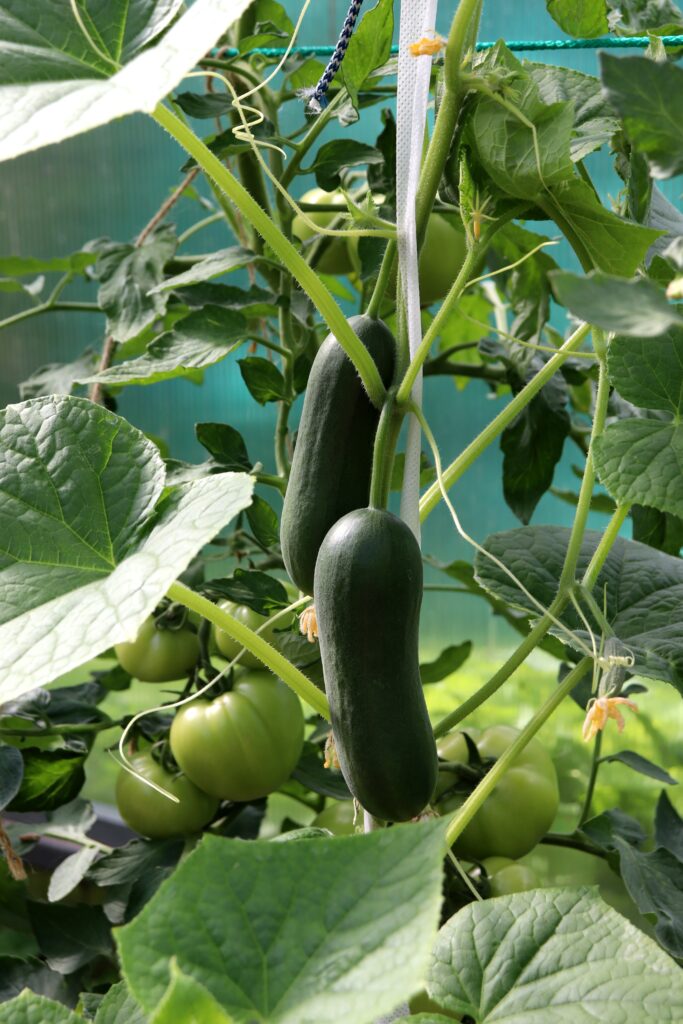
Growing them vertically keeps the fruit suspended in the air where it stays cleaner and is less likely to develop blemishes or rot.
3. It Creates Better Airflow
Dense cucumber foliage can trap humidity around the leaves.
I’ve found vertical growing especially useful in warm, humid climates where fungal diseases can quickly become a problem. Better airflow won’t eliminate disease, but it certainly helps.
4. It’s Easier to Harvest
This is the benefit that I love the most. When your cucumbers are hanging from a trellis, they’re easy to spot and easy to pick.
When they’re sprawling across the ground, there always seems to be one giant cucumber hiding somewhere that you don’t discover until it’s gone yellow and only good for seed saving or the chickens! Or maybe soup? Let me know if you have good ideas for using up those giant cucumbers!
What Kind of Trellis Works Best for Cucumbers?
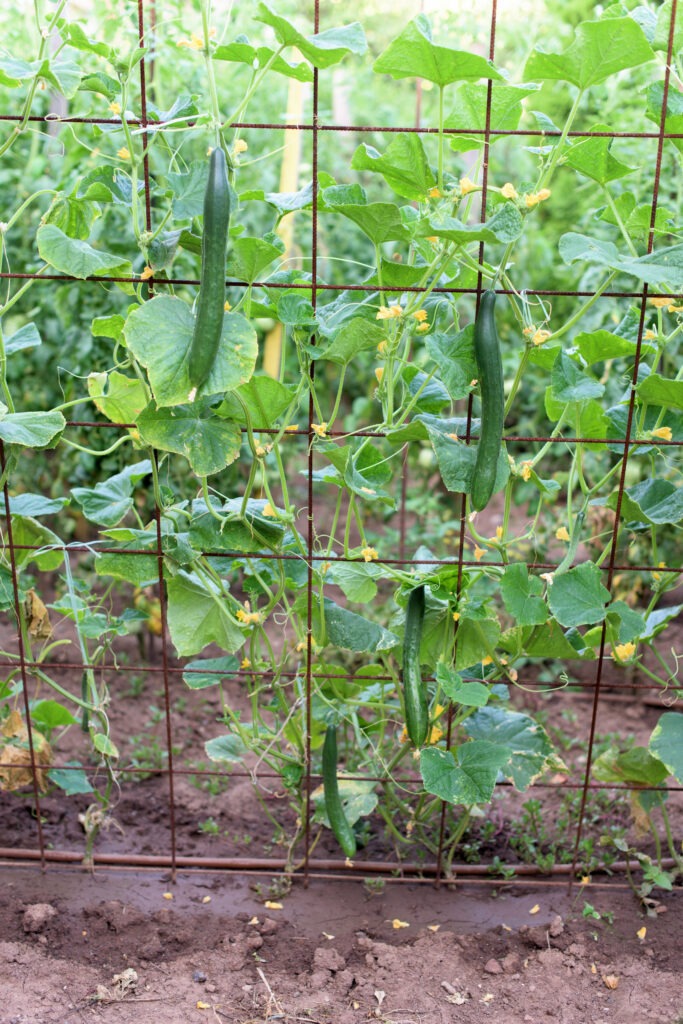
The good news is that cucumbers will grow up just about anything! I’ve seen them happily climb:
- Wire mesh panels
- Cattle panels
- Garden netting
- Wooden trellises
- Chain-link fences
- A-frame supports
- Arbors
- Chicken pens
- Shrubs and trees
Personally, I prefer wire mesh or fencing panels because the tendrils can easily grab hold. It’s also easier to remove the dead plant at the end of the season when your support is a bit sturdy. In chicken mesh, for example, you’ll end up bending the mesh rather than getting the old cucumber tendrils off.
Make sure your support isn’t too lightweight. A healthy cucumber vine loaded with fruit can become very heavy by the end of the season.
Do Cucumbers Need a Trellis?

No, cucumbers don’t need a trellis to grow and produce fruit. Many people just let the vines spread across the ground, and the plants will still flower, set fruit, and provide a harvest.
That said, most vining cucumber varieties benefit from some type of support. A trellis helps keep the vines contained, makes harvesting easier, and reduces the amount of garden space the plants take up.
I’ve grown cucumbers both ways, and while they’ll happily produce fruit on the ground, I find them much easier to manage on a trellis. The fruit stays cleaner, it’s easier to spot cucumbers before they become oversized, and the improved airflow can help reduce disease problems in humid weather.
If you have plenty of space, letting cucumbers sprawl is perfectly fine. I personally think adding some form of trellis is well worth it, but I’ve grown them both ways. Sometimes, my plants will self-seed and start growing somewhere where it’s impractical to add a trellis. In that case, I’ll just leave them to it!
Which Cucumbers Grow Best Vertically?
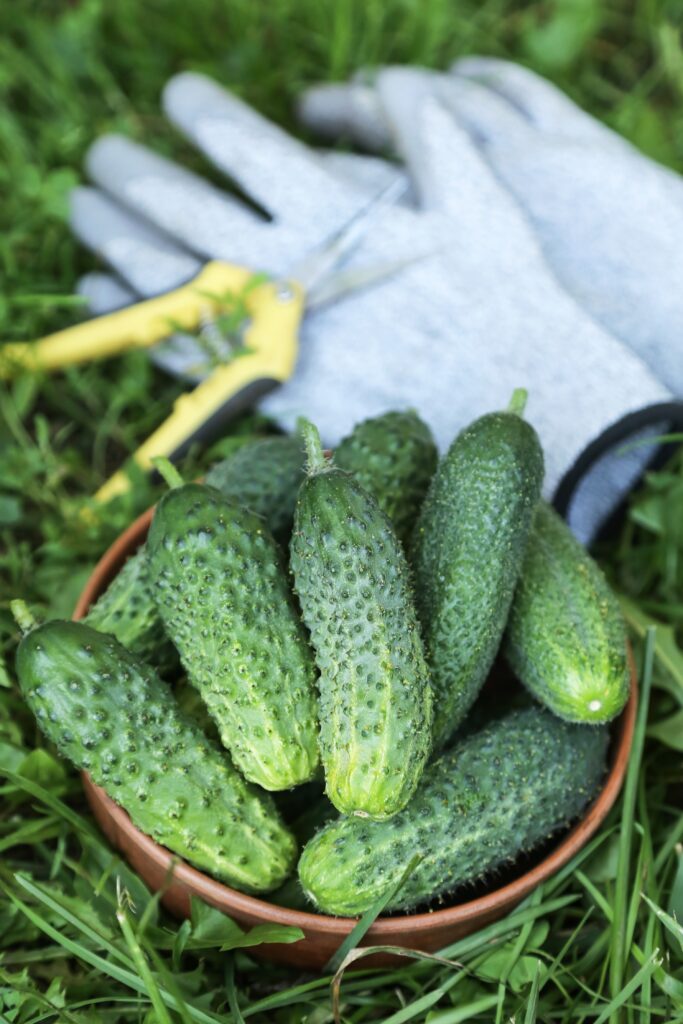
Most vining cucumber varieties are excellent for vertical growing.
Some popular options include:
I’ve found Lebanese cucumbers particularly enthusiastic climbers. Once they get going, they seem determined to reach the top of whatever support you give them.
Bush cucumber varieties generally don’t need a trellis, although they can still benefit from light support.
How to Grow Cucumbers Vertically
1. Install the Trellis First
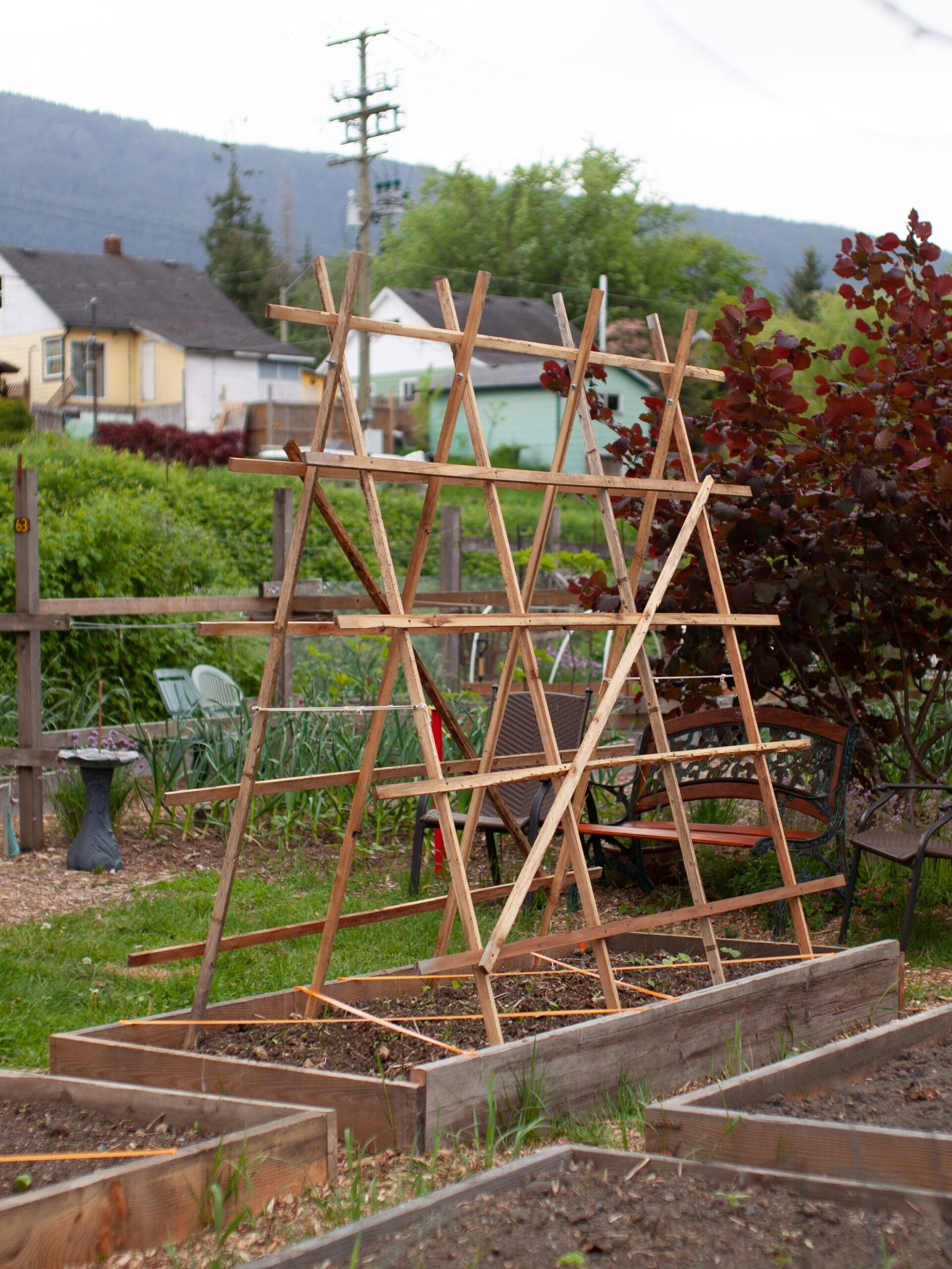
It’s easiest if you put your support in place before you plant your cucumbers. It’s not always possible, like in the case of self-seeders, but it really does make your life easier.
Trying to install a trellis after the vines start spreading often results in damaged roots or broken stems.
2. Plant at the Base of the Trellis
Plant your seeds or seedlings near the base of the support.
Most cucumber plants should be spaced about 12 to 18 inches (30 to 45 cm) apart when growing vertically. This gives the vines enough room to climb without becoming overcrowded.
Proper spacing improves airflow around the leaves, which can help reduce problems with powdery mildew and other fungal diseases. It also makes watering, pruning, and harvesting much easier once the plants start producing.
If you’re growing cucumbers in a raised bed, it can be tempting to squeeze in extra plants. In my experience, giving them a little more room usually results in healthier plants and a better harvest than cramming too many vines into a small space.
3. Train the Young Vines
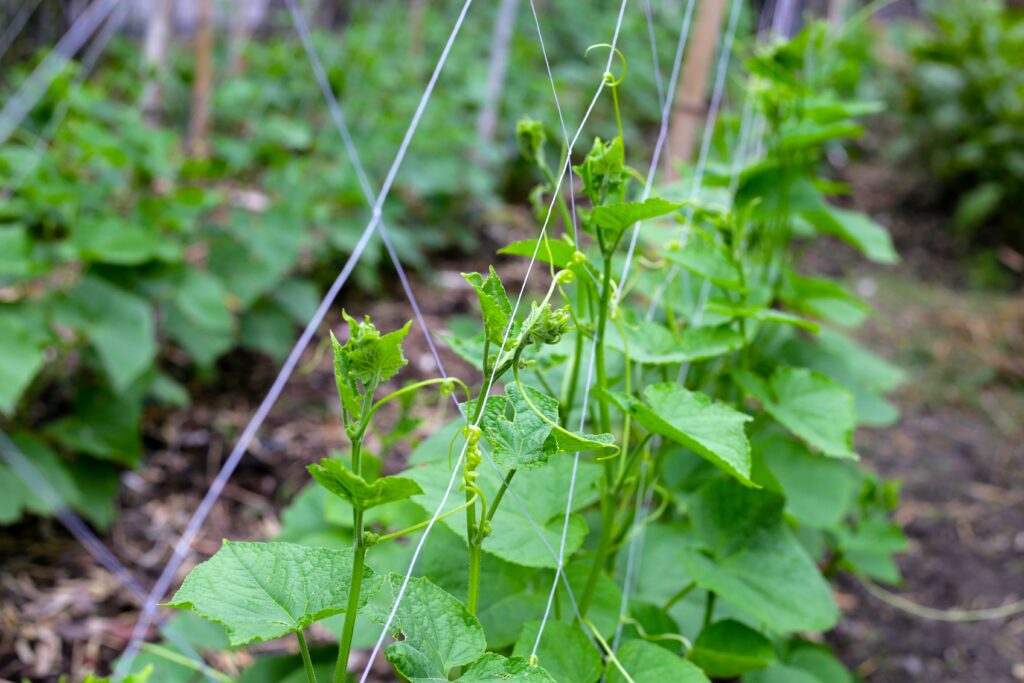
As the vines begin growing, gently guide them toward the trellis. You don’t need to force them or tie every stem. Simply weave a few young vines through the mesh, netting, or support so they’re touching the structure.
Most cucumber plants quickly figure things out from there. The tendrils naturally wrap around nearby supports and do most of the climbing themselves.
Check the plants every few days during their early growth. If a vine starts wandering across the ground, gently lift it and place it back against the trellis. Young cucumber stems are flexible, but mature vines can snap if bent too sharply, so it’s best to start training them early.
I’ve found that once a cucumber plant grabs hold with a few tendrils, it rarely needs any further encouragement.
4. Water Consistently
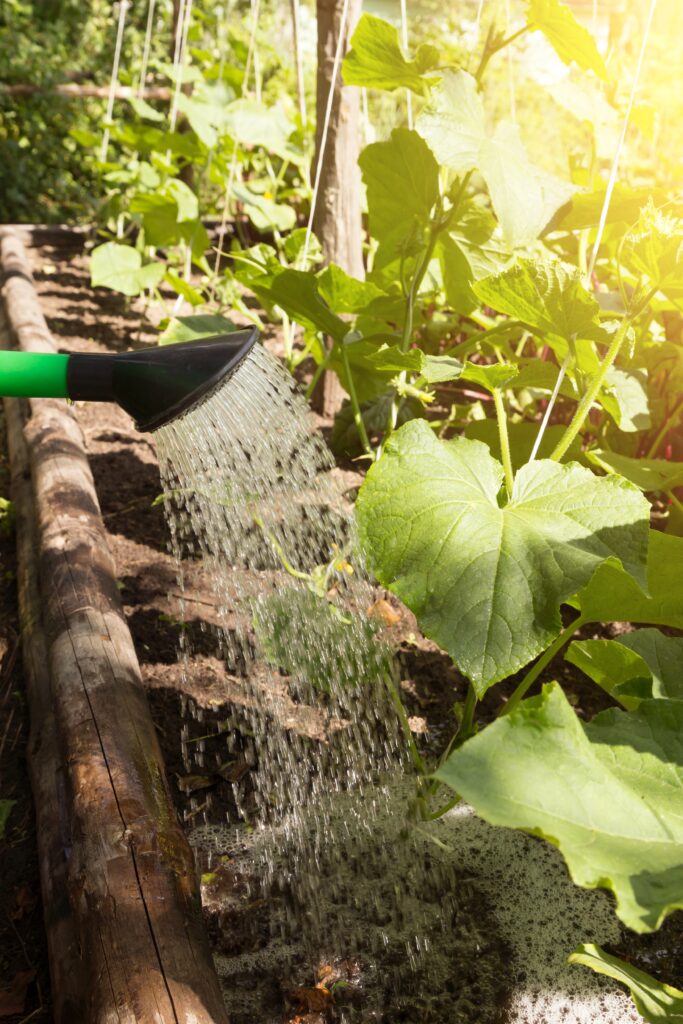
Cucumbers need plenty of water to produce crisp, yummy fruit.
Inconsistent watering is one of the most common causes of bitter cucumbers. If the soil repeatedly dries out and then gets soaked again, the plants can become stressed, leading to reduced production and lower-quality fruit.
Try to keep the soil consistently moist but not waterlogged. A deep watering once or twice a week is usually better than frequent shallow watering, although plants may need more water during hot, dry weather, or if you’re growing them in containers.
Adding a layer of mulch around the base of the plants helps conserve moisture, suppress weeds, and keep soil temperatures more stable. Straw, sugar cane mulch, shredded leaves, or compost all work well.
During the peak of summer, I find it’s worth checking cucumber plants regularly. They can go from looking perfectly happy to noticeably wilted surprisingly quickly, especially when they’re covered in developing fruit. And once they go backwards, they struggle to recover.
5. Feed During the Growing Season
Cucumbers are hungry plants.
Good soil rich in compost will go a long way, but regular feeding during the growing season can help keep plants productive for longer.
Do Cucumbers Need to Be Tied to a Trellis?
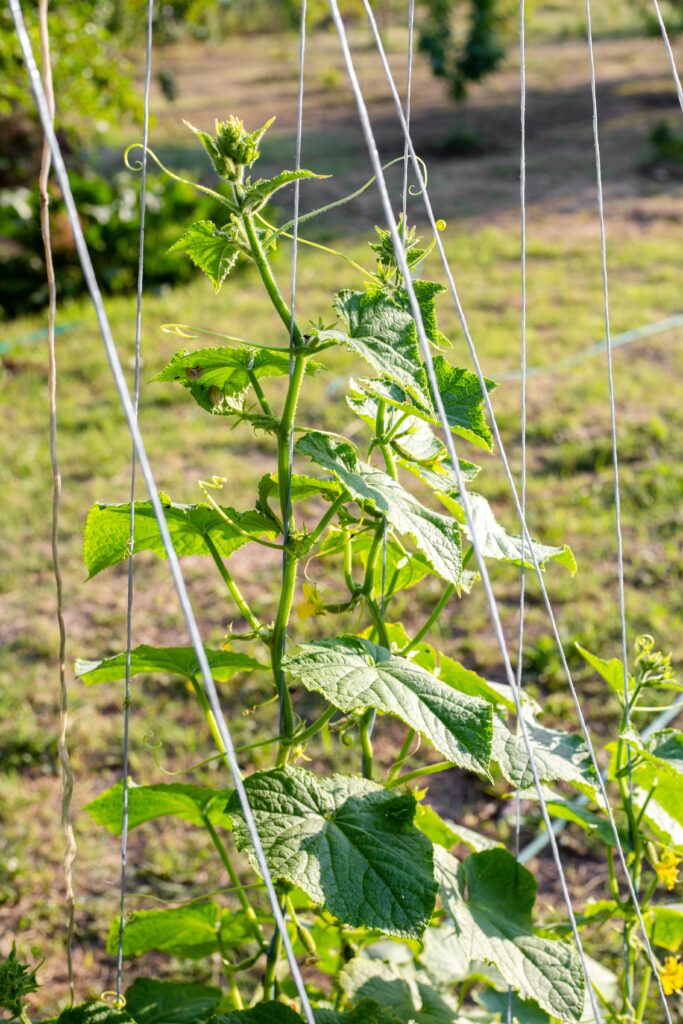
Usually not.
Unlike tomatoes, cucumbers are natural climbers.
Most varieties attach themselves using tendrils and need very little assistance.
Occasionally, you may need to guide a wandering vine in the right direction, but once the plant grabs hold, it generally takes care of itself.
Can Large Cucumbers Be Grown Vertically?
Absolutely.
You might worry that large cucumbers will pull the vines down, but they’re actually surprisingly strong. Most varieties support their fruit without any issues!
Very large fruits can be supported with slings (like the ones below) made from soft fabric or mesh if needed, but I’ve rarely found this necessary.

Common Problems When Growing Cucumbers Vertically
1. Vines Won’t Climb
This is usually caused by the support being too smooth. Wire mesh, netting, and fencing are much easier for cucumber tendrils to grip than solid timber.
2. Powdery Mildew
Vertical growing improves airflow, but spacing still matters. Avoid overcrowding plants and remove heavily affected leaves if necessary.
3. Misshapen Fruit
Curved or oddly shaped cucumbers are usually caused by inconsistent watering or poor pollination rather than the trellis itself.
Can You Grow Cucumbers Vertically in Containers?

Yes.
Growing cucumbers vertically works very well in large pots, grow bags, and raised planters.
Use a sturdy support and choose a container that holds at least 5 gallons (20 liters) of soil per plant. Container-grown cucumbers usually need more frequent watering than those growing in the ground.
Frequently Asked Questions
How tall should a cucumber trellis be?
Most cucumber trellises should be at least 5 to 6 feet (1.5 to 1.8 m) tall. Many cucumber varieties continue growing throughout the season, and a taller trellis gives the vines plenty of room to climb.
Do cucumbers grow better vertically or on the ground?
Both methods can produce good harvests, but vertical growing offers several advantages. It saves space, improves airflow, keeps fruit cleaner, and makes harvesting easier. For small gardens and raised beds, growing cucumbers vertically is often the better option.
What is the best support for growing cucumbers vertically?
Wire mesh panels, cattle panels, garden netting, and chain-link fencing all work well. The best support is one that is strong enough to hold mature vines and allows cucumber tendrils to easily grab hold.
Can you grow cucumbers vertically in pots?
Yes. Cucumbers grow very well in large pots, grow bags, and containers when provided with a sturdy trellis. Choose a container that holds at least 5 gallons (20 liters) of soil per plant and water regularly.
Do all cucumber varieties need a trellis?
No. Bush cucumber varieties can grow without support. However, most vining cucumbers benefit from a trellis and are much easier to manage when grown vertically.
How far apart should vertically grown cucumbers be planted?
Most cucumber plants should be spaced 12 to 18 inches (30 to 45 cm) apart when growing vertically. Proper spacing improves airflow and helps reduce disease problems.
Final Thoughts

Growing cucumbers vertically is one of the simplest ways to save space while producing cleaner, healthier fruit.
If I had to choose between letting cucumbers sprawl across the garden or training them up a trellis, I’d choose the trellis every time. The plants are easier to manage, harvesting is easier, and the garden stays far tidier throughout the season.
Once you’ve grown cucumbers vertically, it’s surprisingly difficult to go back.

Fill your garden with fresh vegetables and your kitchen with homegrown food. This heirloom seed collection includes 32 popular varieties, from tomatoes, cucumbers, and lettuce to pumpkins, corn, beans, and carrots. It's an easy way to start a productive vegetable garden, grow more of your own food, and enjoy harvests that taste far better than store-bought produce. Perfect for anyone dreaming of a backyard packed with fresh vegetables!


What’s worked for you?
Have something to add? Share your experience below. Whether you’ve been gardening, raising animals, or making things yourself for years, your tips might help someone else.