21 Magnificent Winter Birds To Look For In Your Backyard This Season!
Welcome! This article contains affiliate links, meaning I get a commission if you decide to make a purchase through my links, at no extra cost to you.
Winter might look quiet at first glance. But your homestead is about to host one of the most vivid seasons of all. While the garden sleeps under frost, a cast of tough, brilliant birds steps into the spotlight, flashing color, song, and attitude in every corner of your yard.
Want to know who is visiting your feeder? Here are 21 species to keep an eye out for!
Your Field Guide to Winter’s Most Resilient Feathers
From ruby-red cardinals that refuse to fly south to acrobatic nuthatches walking upside down on tree trunks, here are 21 spectacular species that will transform your winter backyard into a living showcase of nature’s resilience and beauty.
1. Anna’s Hummingbird
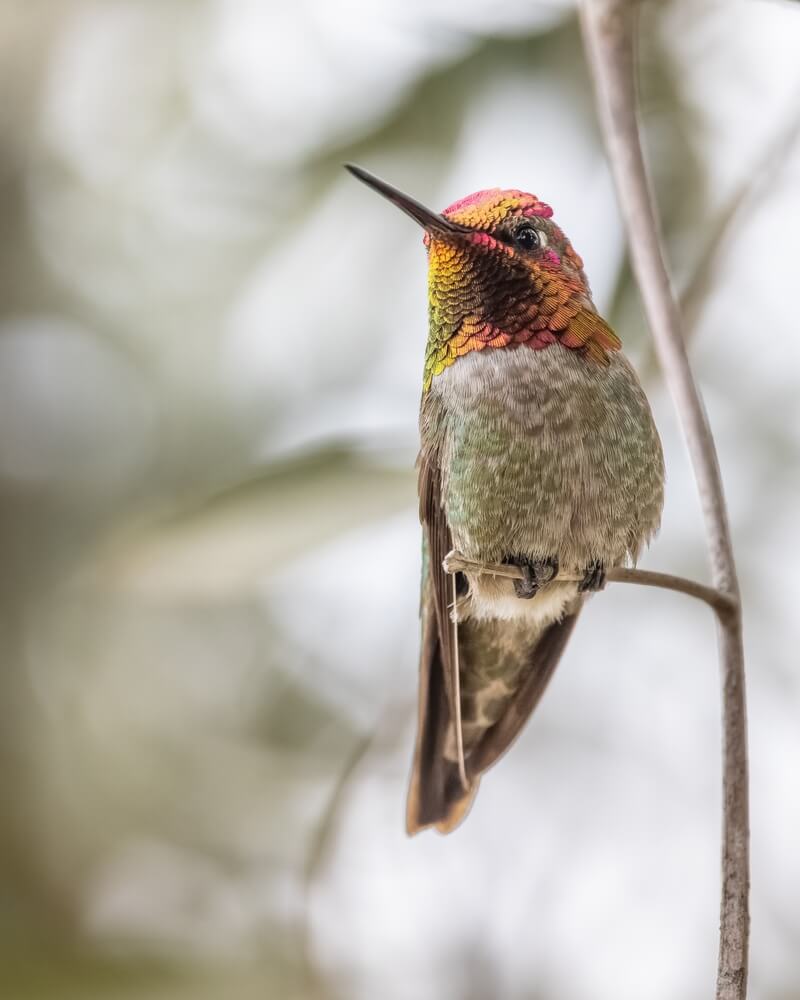
Anna’s hummingbird defies everything you thought you knew about hummingbirds. This one refuses to migrate. It stubbornly remains along the Pacific Coast year-round, even when temperatures plummet. Males flash iridescent rose-pink throats that catch winter sunlight like stained glass. And they’ll fiercely defend your late-season feeders with aerial displays that rival any summer show.
- USDA Zones: Most common in Zones 8–10 along the Pacific Coast.
- Appearance: Tiny greenish hummingbirds. Males have a striking, iridescent reddish-pink head and throat. Females are mostly green and gray with limited pink.
- Migration Habits: Largely non-migratory. Now overwinters as far north as the Pacific Northwest.
- How To Attract: Keep nectar feeders filled through winter and plant nectar-rich flowers and shrubs.
Anna’s hummingbirds survive conditions that seem impossible. All they need is the right nectar source.
2. Red-Breasted Nuthatch
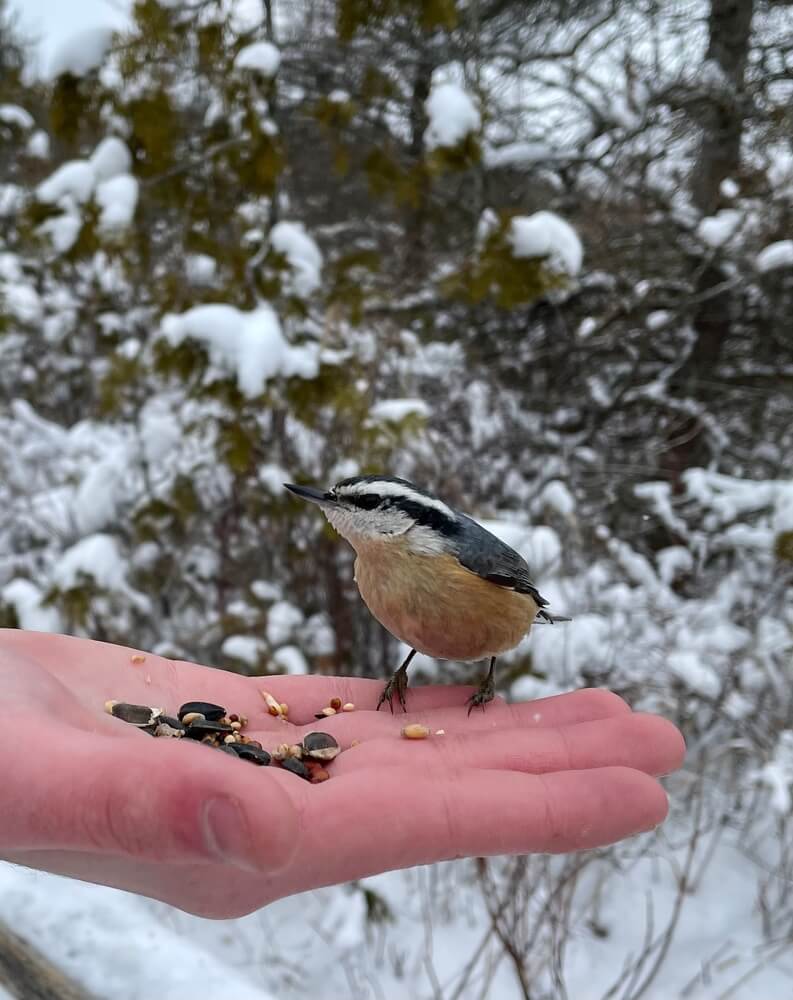
This pint-sized acrobat sports a bold rusty vest and a perpetual expression of determined focus. Watch as it patrols coniferous trees with machine-like efficiency. During irruption years when northern cone crops fail, they flood southward in impressive numbers, bringing their nasal “yank-yank” calls to yards that might not see them annually.
- USDA Zones: Common in northern and montane forests, Zones 2–7.
- Appearance: Small blue-gray birds with a reddish underside, white face, and bold black eye stripe.
- Migration Habits: Irruptive. Move south in the winter when cone crops fail.
- How To Attract: Give sunflower seeds, peanuts, and suet near coniferous trees.
Watch them smear sticky pine resin around their nesting cavities. It’s a brilliant defensive strategy against predators!
3. Downy Woodpecker
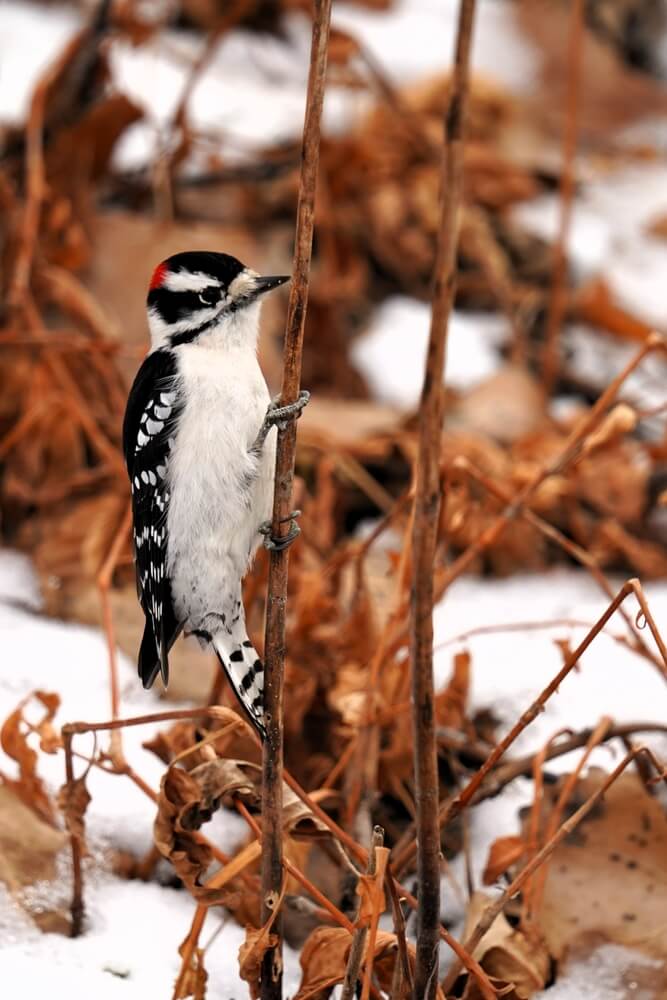
America’s smallest woodpecker is also one of winter’s most dependable guests. Watch for it to visit your backyard suet feeders with the regularity of a mail carrier. Males sport a jaunty red patch on the back of their heads. Both sexes hammer away at dormant insect larvae hiding beneath bark. They also provide invaluable pest control for your fruit trees and ornamentals.
- USDA Zones: Widespread across the US and southern Canada. Zones 2–9.
- Appearance: Small black-and-white woodpecker with a checkered back. Males have a small red nape patch.
- Migration Habits: Mostly year-round residents with local winter shifts.
- How To Attract: Offer suet, peanuts, and black oil sunflower seeds near trees.
They’re easy to identify even at a distance. Listen for their solf “pik” call and watch for their undulating (roller coaster) flight pattern.
Read More – 17 Foods To Feed Backyard Birds This Winter – The Ultimate Winter Bird Feeding Guide!
4. American Robin
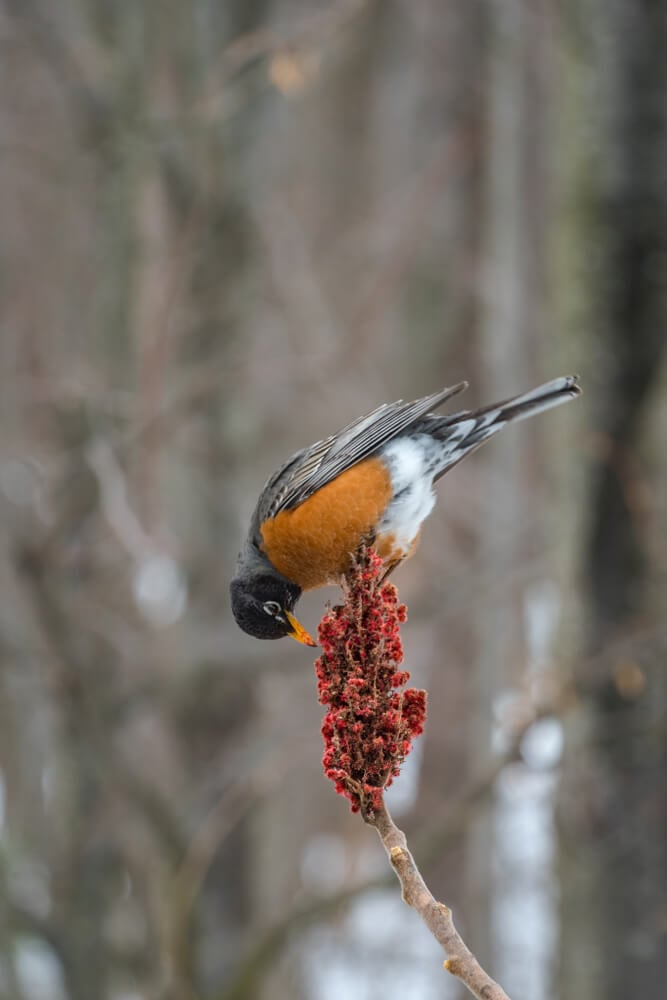
Robins are known as springtime birds. But the opposite is often true. Many overwinter in the US. They switch their protein-rich worm diet to your yard’s fruits and berries to survive. These wintry guests form nomadic flocks that descend on berry-laden shrubs like organized harvest crews. Watch them strip your berry shrubs, hawthorns, hollies, and crabapples with remarkable efficiency.
- USDA Zones: Extensive range, Zones 2–9.
- Appearance: Gray-brown backs and orange-red breasts with a broken white eye ring.
- Migration Habits: Many overwinter in the US. They look for fruits and berries.
- How To Attract: Plant late-season berry trees and shrubs! Provide heated birdbaths.
Spotting winter robins is a reminder to plant more fruit-bearing natives that will sustain these beloved thrushes through the lean months.
5. California Scrub-Jay
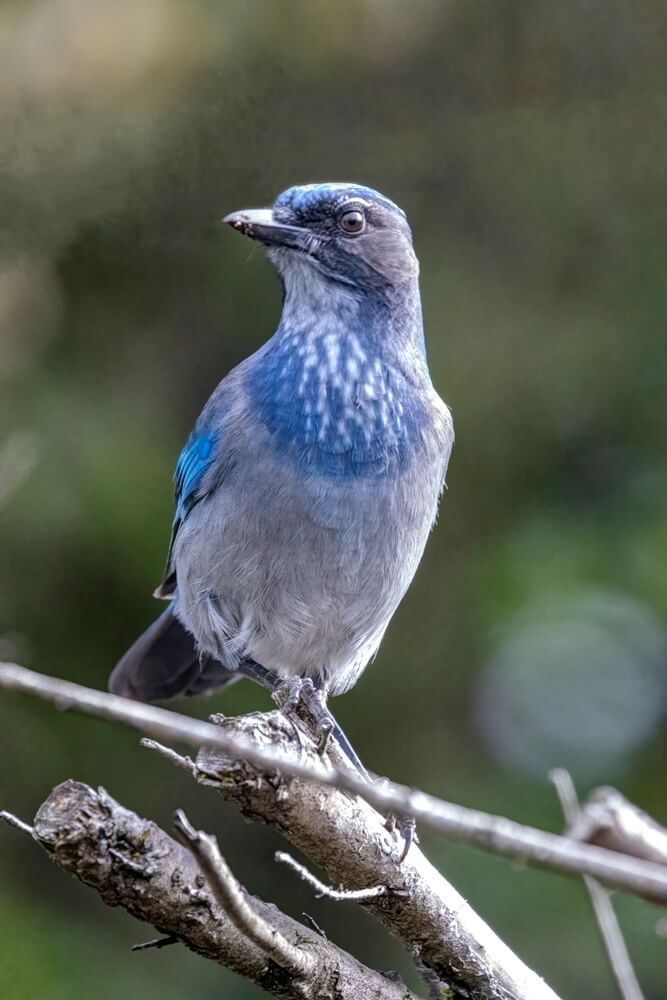
This epic, bold, sapphire-blue opportunist rules the roost in West Coast gardens. These sleek birds have the confidence of someone who knows they’re both beautiful and brilliant. They’re famously bright, rivaling even the mighty crow. They cache thousands of acorns each fall. Even more impressive, they remember locations with uncanny accuracy while also raiding competitors’ stashes when opportunity knocks!
- USDA Zones: Found from British Columbia to Baja, Zones 7–10.
- Appearance: Bright blue head, wings, and tail with whitish underparts and blue necklace.
- Migration Habits: Mostly non-migratory. Roam locally for acorns.
- How To Attract: Offer peanuts, sunflower seeds, and suet. Grow native oaks.
Their raucous calls serve as your homestead’s alarm system, announcing hawks, cats, and other potential threats long before you’d notice them yourself.
6. Tufted Titmouse
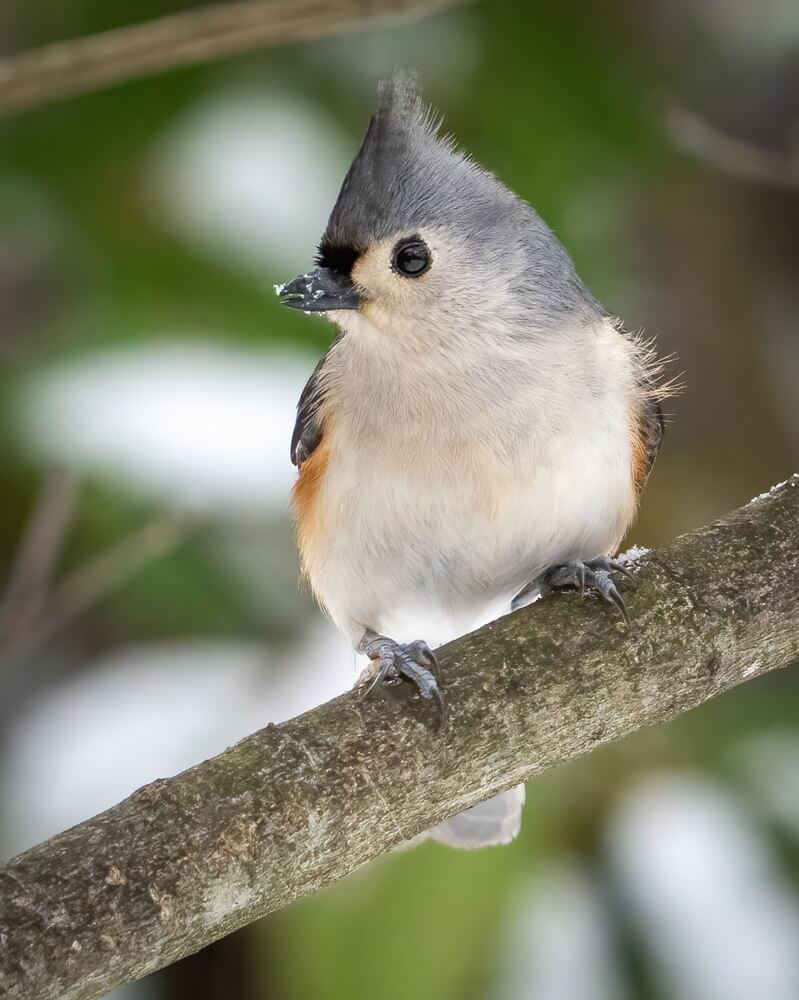
The Tufted Titmouse is a charming songbird. It delivers a lovely warming energy to winter feeders across the East and Midwest. They have soft, gray feathers, a perky crest, and dark button eyes. Their clear “peter-peter-peter” whistles seem unusual in the winter! Their melodies cut through cold air like woodland bells. Watch with delight as they’ll stuff their beaks with multiple sunflower seeds before flying off to cache them for later. They’re effectively planting future sunflowers throughout your property.
- USDA Zones: Eastern US, Zones 4–9.
- Appearance: Small gray birds with a crest, big dark eyes, and rusty flanks.
- Migration Habits: Year-round residents. They often join mixed winter flocks.
- How To Attract: Give sunflower seeds, peanuts, suet, and nest boxes.
Their acrobatic feeding style and bold personality make them favorites among both novice and experienced birders.
Read More – 21 Best Flowers To Attract Hummingbirds – Blue, Red, And Purple Flowers!
7. House Finch
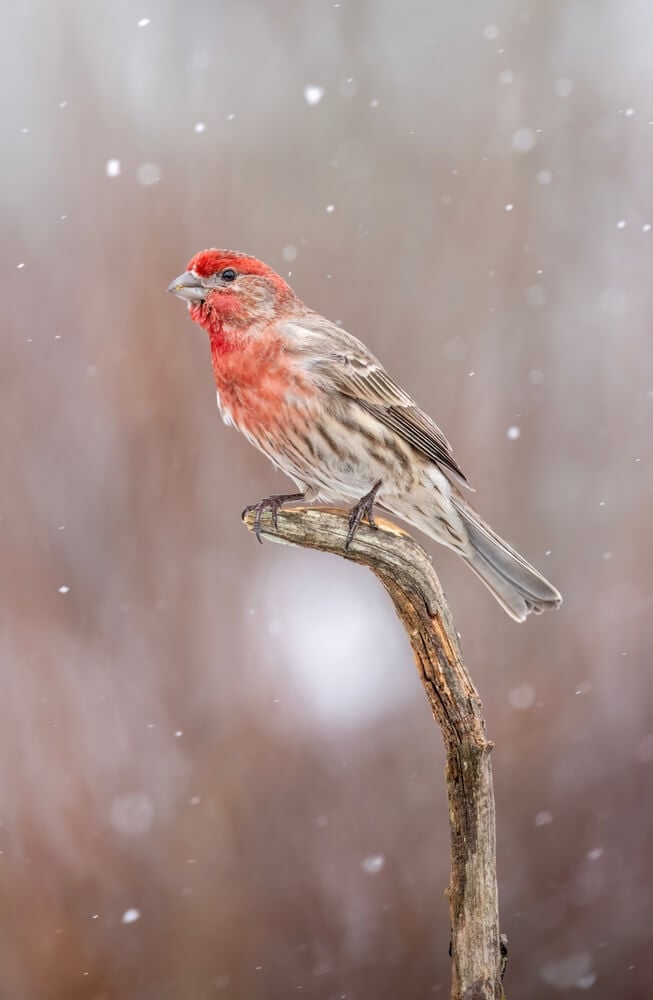
Males wear raspberry-red plumage that ranges from bright crimson to pale orange, depending on diet, creating a living color spectrum at your thistle and sunflower feeders. Originally native only to the West, these adaptable finches now thrive coast to coast, their cheerful warbling songs providing a welcome soundtrack even on the coldest mornings.
- USDA Zones: Lower 48 states, Zones 3–10.
- Appearance: Brown-streaked. Males show bright red on the head and breast.
- Migration Habits: Year-round residents that form winter flocks.
- How To Attract: Offer thistle and black oil sunflower seeds.
They’re particularly valuable for homesteaders because their presence often indicates a healthy, pesticide-free environment where natural food sources still abound.
8. Northern Cardinal
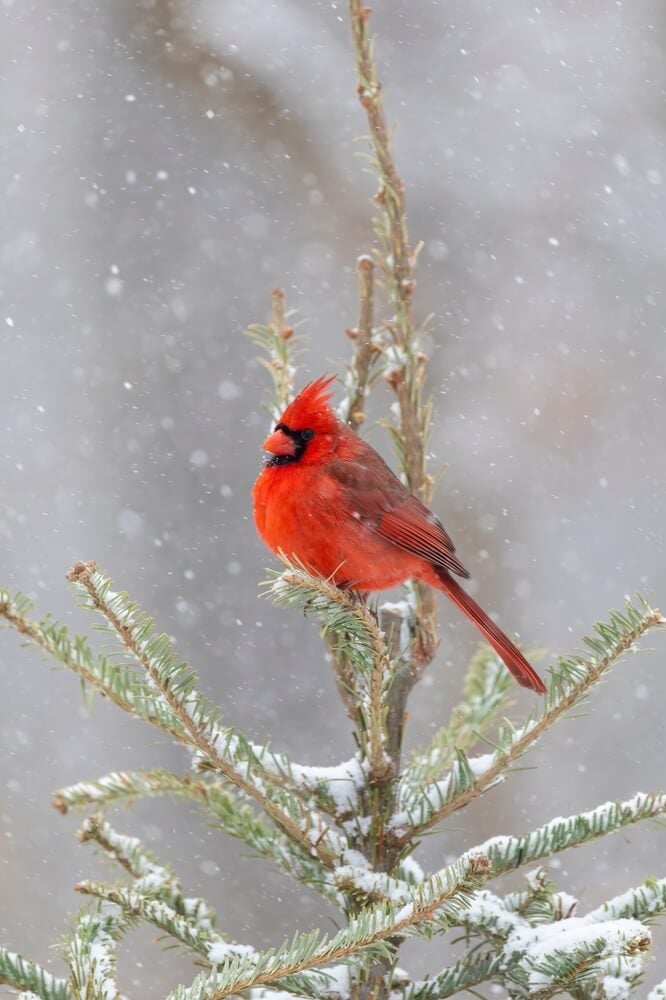
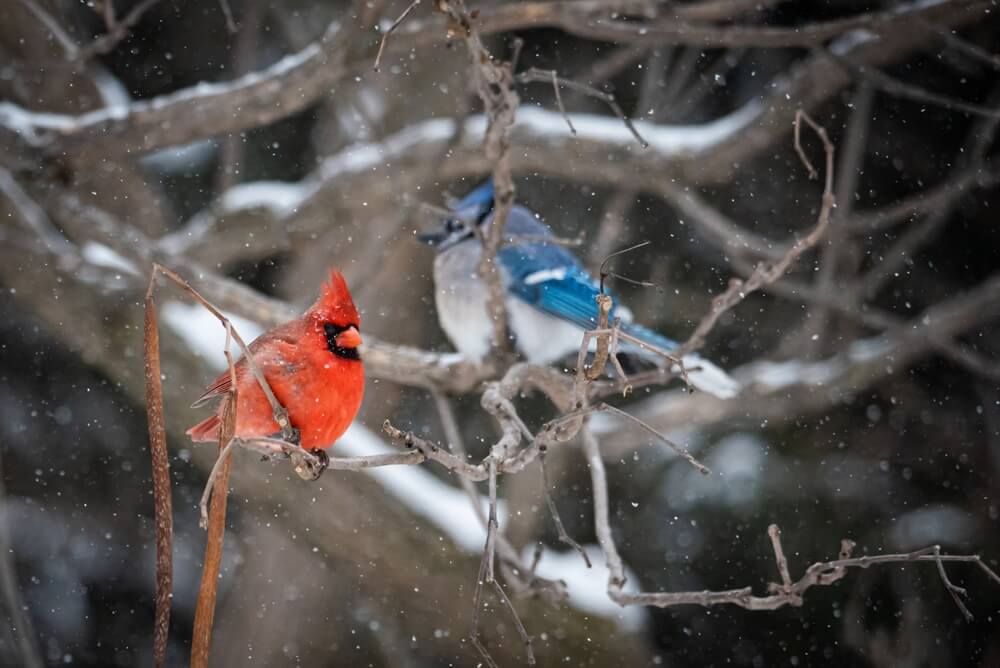
The cardinal is winter’s most iconic backyard ambassador. It stands out in winter homesteads like a crimson flame. These festive visitors are always welcome as nature’s perfect holiday decoration. The males have the fancy red feathers. Females are equally stunning in warm cinnamon-tan with coral beaks and red highlights, and both sexes sing year-round, including winter days when most birds stay silent.
- USDA Zones: Great Plains eastward, Zones 4–9.
- Appearance: Males are bright red. Females are warm brown with red tints.
- Migration Habits: Non-migratory and territorial year-round.
- How To Attract: Offer sunflower seeds, safflower, and cracked corn.
Their preference for ground feeding and dense shrubs makes them easy to attract by allowing leaf litter to accumulate and by maintaining brushy edges where they feel secure.
9. Pine Siskin
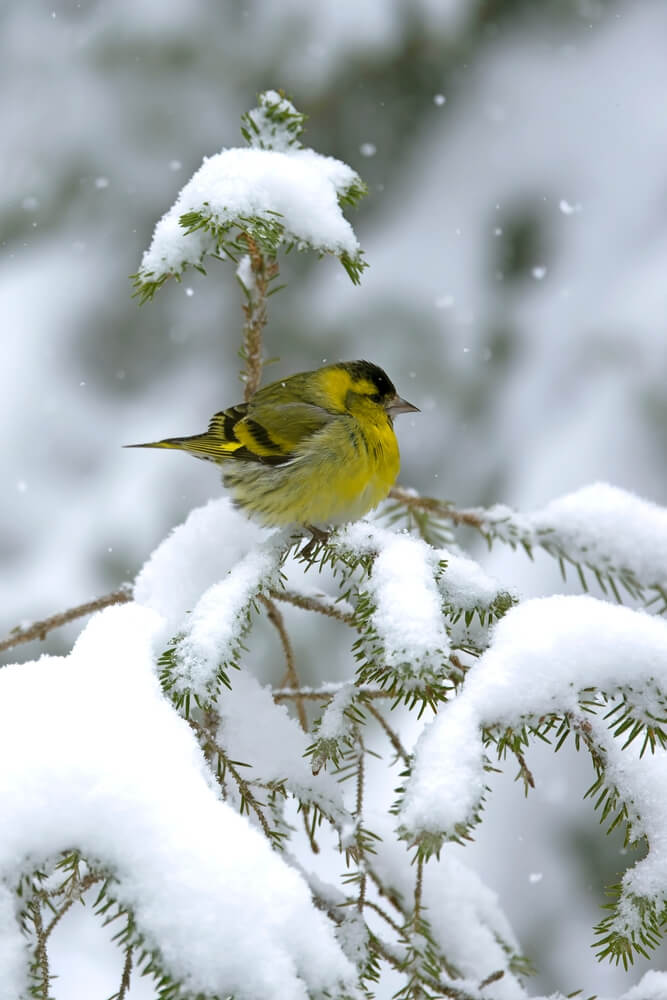
These hyperactive, heavily streaked finches are winter’s wild cards! They often appear in massive numbers in some years. Then, they strangely vanish entirely in others, depending on the success of northern seed crops. They’re easy to spot. Wait for their sharp, rising “zreeee” calls that announce their arrival at thistle feeders, where they feed with frantic energy alongside goldfinches and other small finches.
- USDA Zones: Breeds in northern and montane forests. Zones 2–6.
- Appearance: Small. Streaky brown finches with yellow wing and tail highlights.
- Migration Habits: Strongly irruptive in winters when northern seed crops fail.
- How To Attract: Offer thistle seed in tube feeders.
Their irruptive (somewhat random) nature makes each sighting feel like a special event. It’s a reminder that winter bird populations follow ecological rhythms that extend far beyond your backyard!
Read More – 5 Farm Birds That Eat Ticks on Their Daily Farm Patrol!
10. Black-capped Chickadee
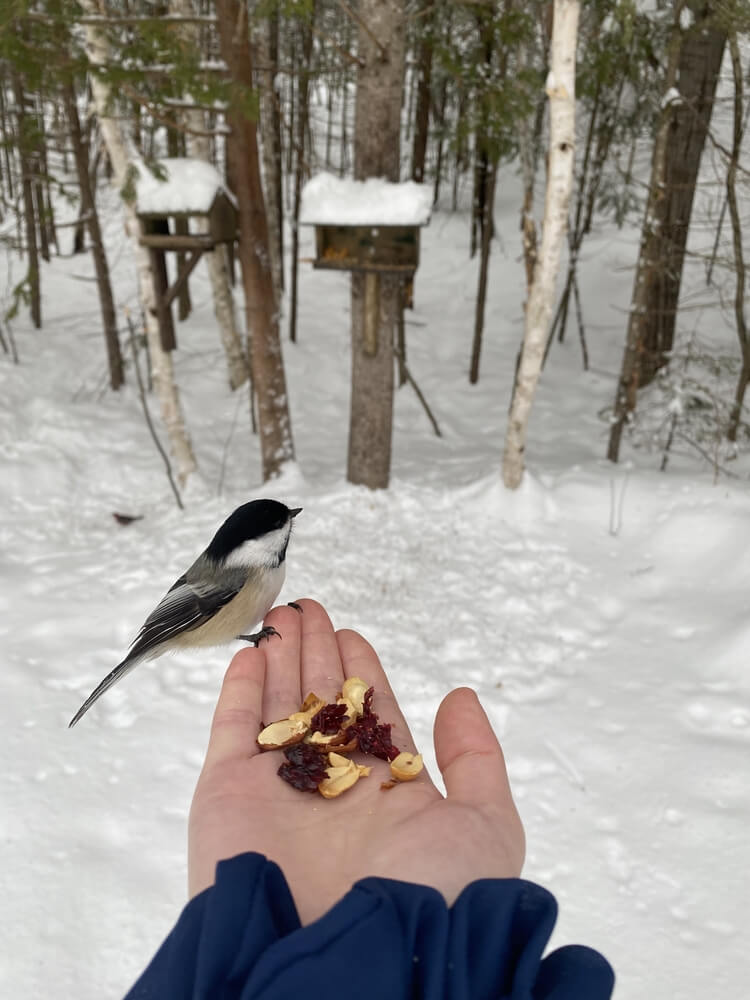
If winter had an official mascot, this fearless, inquisitive fluffball would win unanimously. Their signature “chick-a-dee-dee-dee” call becomes more urgent and frequent when predators approach. More “dees” indicate greater danger in a surprisingly sophisticated communication system.
- USDA Zones: Northern US and Canada, Zones 2–7.
- Appearance: Black cap and bib, white cheeks, gray back, buffy sides.
- Migration Habits: Non-migratory; cache food and form winter flocks.
- How To Attract: Offer sunflower seeds, peanuts, suet, and nest boxes.
These tiny survivalists work nonstop, caching food items. They can remember locations for weeks.
11. Spotted Towhee
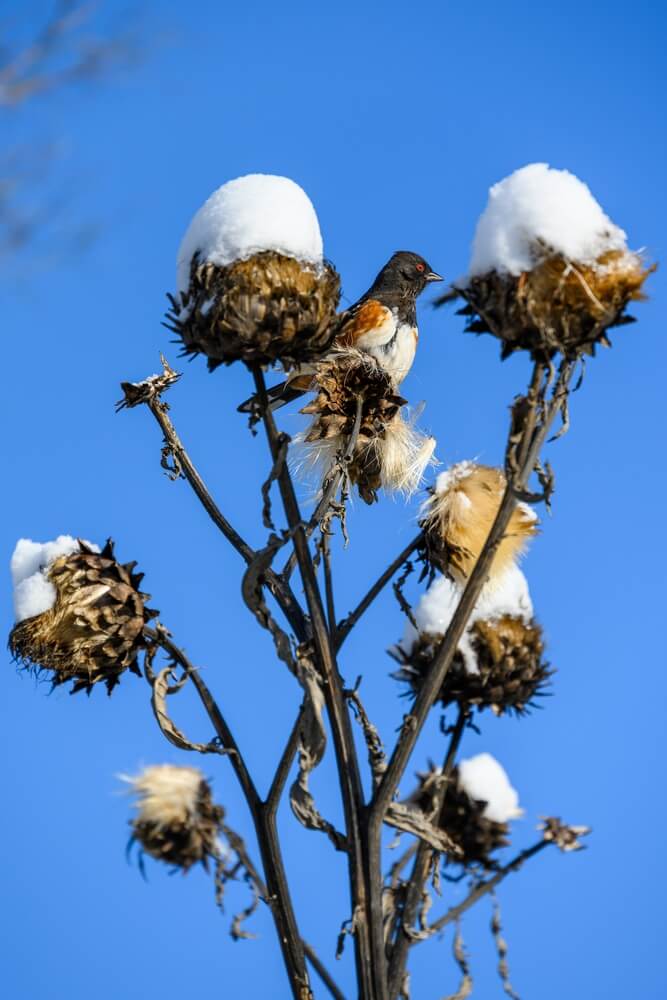
This stocky, sparrow-sized bird is gorgeous. It has a bold black hood, white-spotted wings, and rufous flanks that flash like embers when it kicks through leaf litter. Their double-footed scratching technique sounds like a much larger animal rustling through your garden beds, making them valuable composting assistants who turn organic matter while hunting for insects and seeds.
- USDA Zones: Western North America, Zones 4–10.
- Appearance: Males have black heads and back, rufous sides, white bellies, and red eyes.
- Migration Habits: Northern/mountain birds move lower in winter; others remain year-round.
- How To Attract: Scatter seed on the ground and maintain brush piles.
Western gardeners who maintain brush piles and wild edges will be rewarded with these birds’ presence and their distinctive “mewing” call.
12. Red-bellied Woodpecker
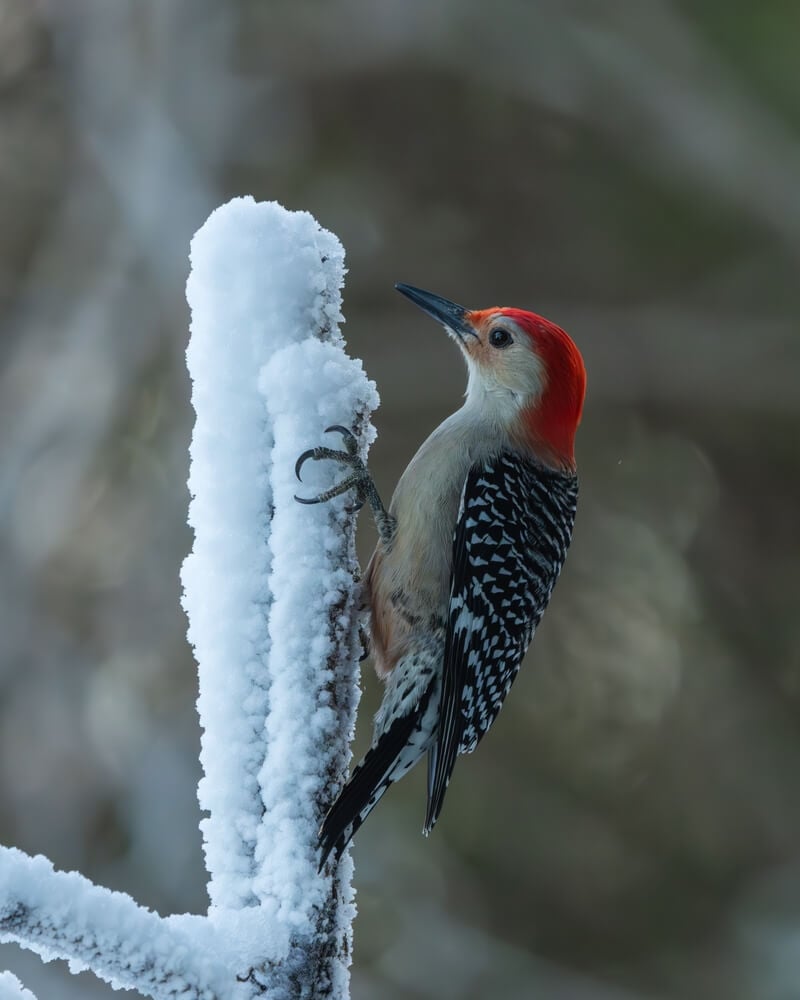
Despite its name, the pale pink belly blush is far less noticeable than the stunning red cap that covers the entire head and neck of males. Females sport red only on the nape. This adaptable woodpecker is expanding northward as winters moderate, bringing its rolling “churr” call and enthusiastic suet consumption to regions where it was once rare.
- USDA Zones: Eastern and Central US, Zones 5–9.
- Appearance: Black-and-white barred back with pale underparts. Males have a red crown and nape.
- Migration Habits: Year-round residents.
- How To Attract: Offer suet, peanuts, and sunflower seeds near mature trees.
They’re particularly beneficial for orchards and woodlots, as they excavate destructive wood-boring beetles and create cavities that dozens of other species later use for nesting.
Read More – 21 Ways To Create A Fall Wildlife Garden And Welcome Nature To Your Backyard
13. American Crow
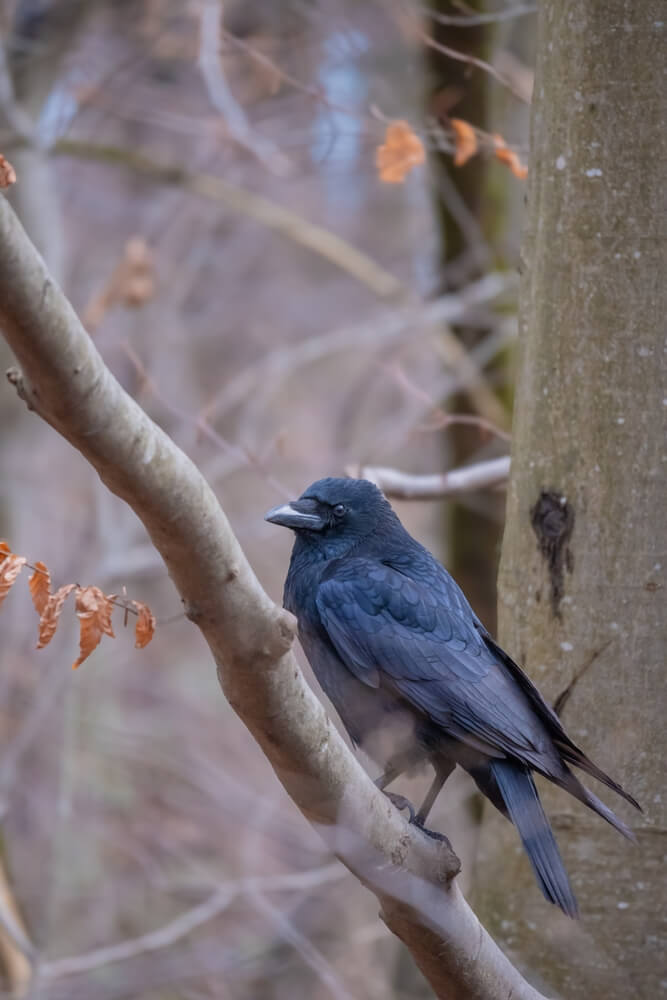
Do you love crows? Or curse them? Either way, they travel everywhere! Find them in remote country farms to bustling Boston, Massachusetts, and urban downtown parking lots, with equal success. Their problem-solving intelligence is legendary. Crows can count, use tools, hold grudges, and recognize individual human faces for years! (So, always be kind. They won’t forget you!)
- USDA Zones: Most of North America. Zones 2–9.
- Appearance: Large black birds with substantial bills and fan-shaped tails.
- Migration Habits: Mostly residents. Northern birds shift slightly south and form huge winter roosts.
- How To Attract: Provide open areas with scattered grains or peanuts.
While they may raid your compost or scatter trash, they also consume vast quantities of crop-damaging insects and carrion, making them valuable (if sometimes annoying) members of any homestead ecosystem.
14. Carolina Wren
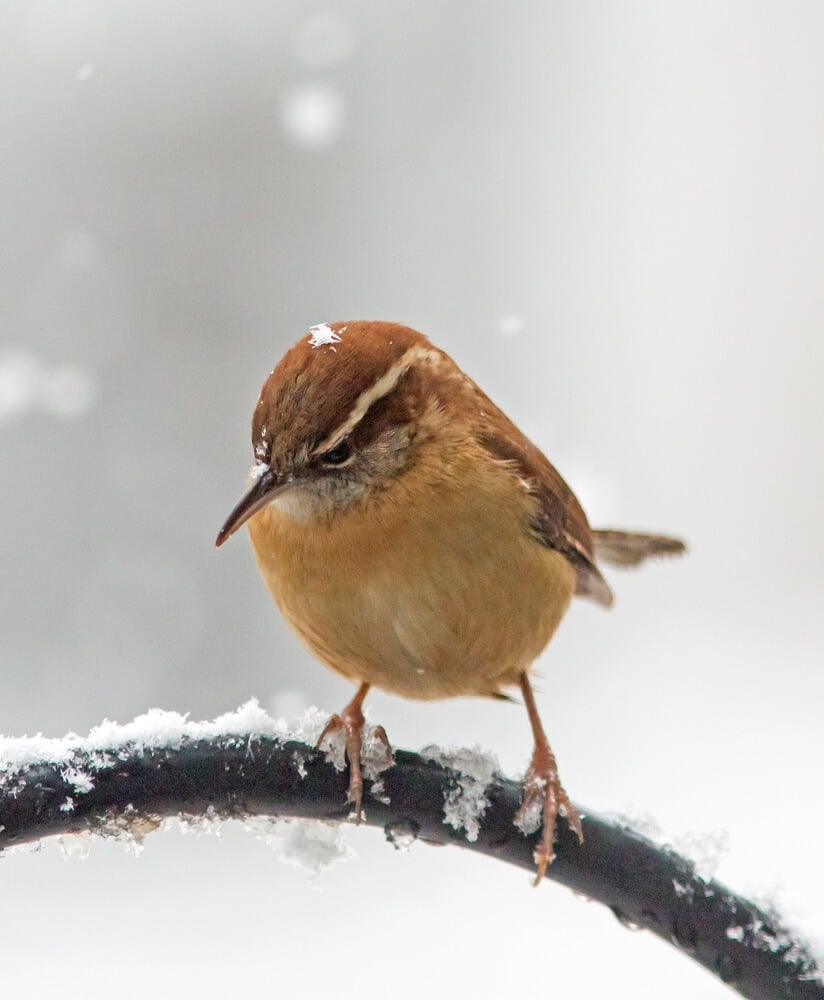
Don’t let the tiny package fool you. This reddish-brown dynamo belts out “teakettle-teakettle-teakettle” songs with enough volume to be heard across several acres. Their upturned tail and white eyebrow stripe give them a perpetually cheerful expression as they investigate every nook and cranny of your outbuildings, hunting spiders and insects even in subfreezing weather.
- USDA Zones: Eastern US, Zones 5–9.
- Appearance: Warm brown birds with buffy underparts and a bold white eyebrow.
- Migration Habits: Non-migratory but vulnerable to severe cold.
- How To Attract: Offer suet, mealworms, peanuts, and provide dense cover.
They’re cavity nesters who’ll readily adopt unusual spots like old boots, flowerpots, or mailboxes, making them delightful (if occasionally inconvenient) neighbors.
15. Dark-eyed Junco
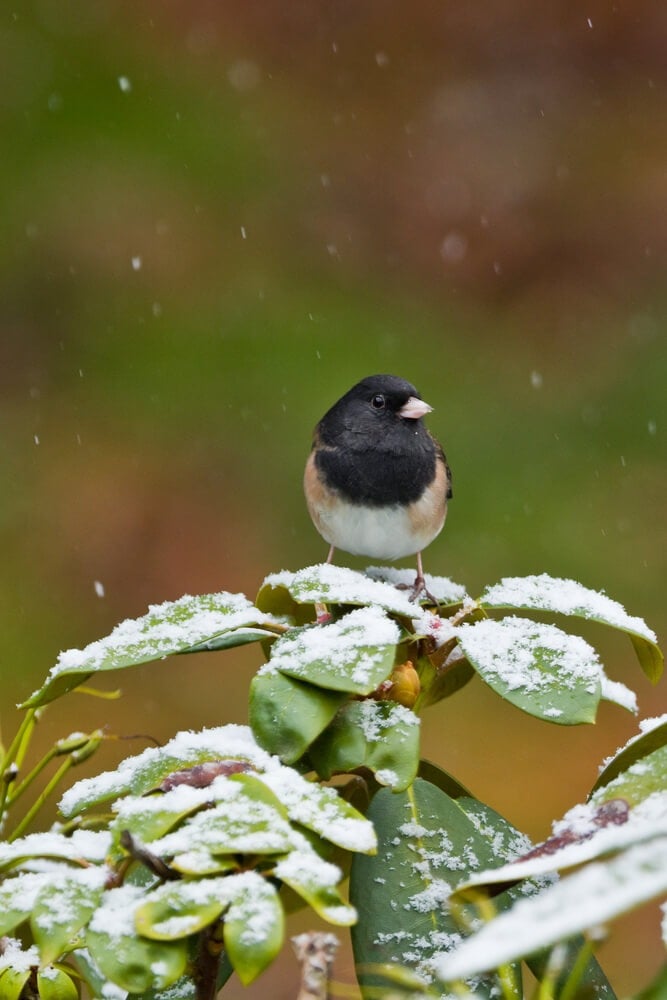
These slate-gray and white ground-foragers arrive with the first cold fronts and blanket the country in winter. They hop beneath feeders to vacuum up seeds that more cautious birds drop from above. Their white outer tail feathers flash like semaphore flags when they flush, creating a distinctive “junco scatter” that’s one of winter’s most recognizable bird behaviors. (Many homesteaders call them Snowbirds!)
- USDA Zones: Zones 2–8 across North America.
- Appearance: Dark head and back with pale belly and white outer tail feathers.
- Migration Habits: Breed in north/high elevations. Winter farther south or downslope.
- How To Attract: Offer mixed seed or millet on the ground or low trays.
Their presence is so reliable that many homesteaders consider them nature’s calendar. Their arrival marks the official arrival of winter and the eventual return of spring.
Read More – How to Build a Small Wildlife Pond – Our Real-Life Experience!
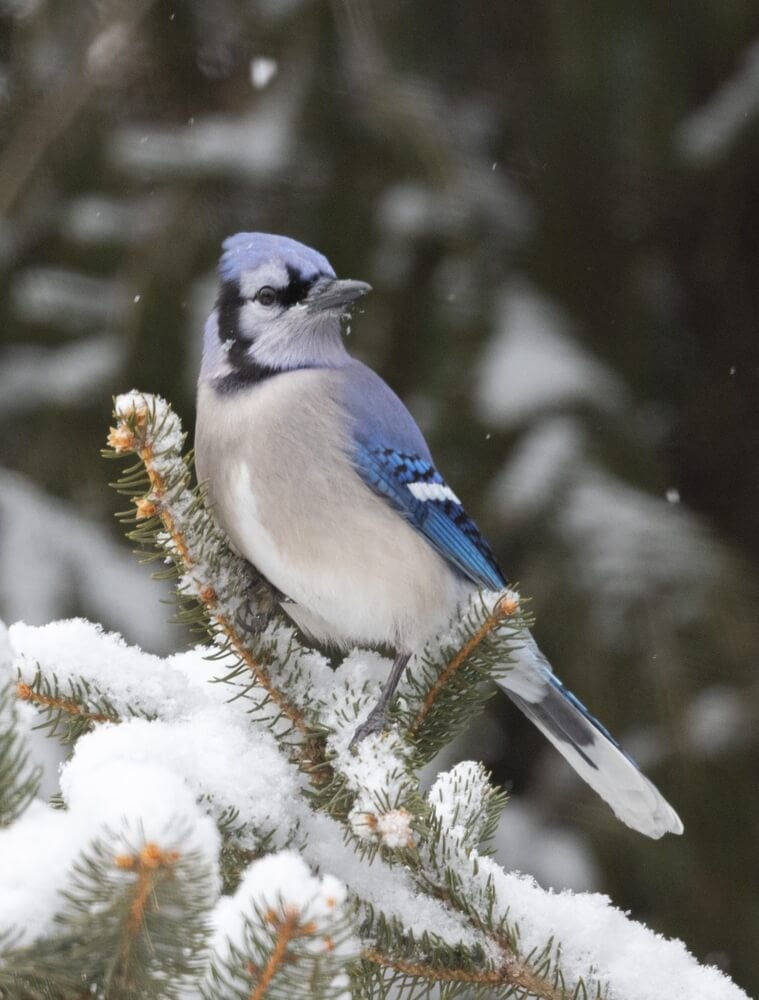
16. Blue Jay
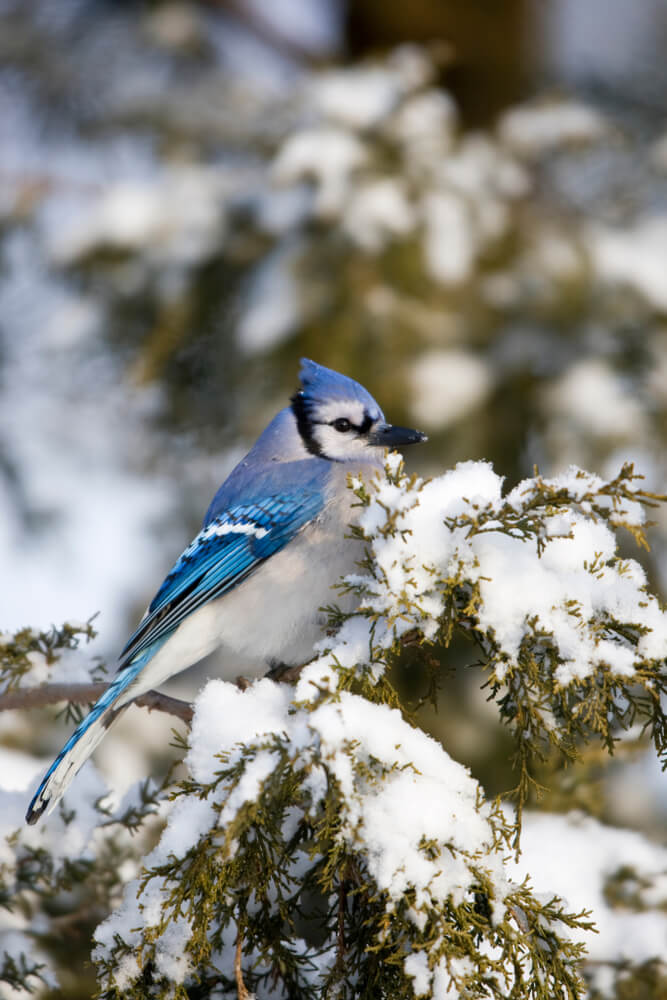
These striking blue, white, and black corvids are winter’s most vocal critics. They boldly proclaim their opinions about everything from hawk sightings to empty feeders with loud “jay-jay” calls. They’re oak forest architects who cache thousands of acorns annually and forget just enough to plant entire groves of future trees. This makes them invaluable reforestation agents for homesteaders managing woodlots.
- USDA Zones: Eastern and Midwestern US, Zones 3–9.
- Appearance: Blue with white underparts, black necklace, and crest.
- Migration Habits: Mostly resident; some northern birds migrate.
- How To Attract: Offer peanuts, sunflower seeds, and corn near oak trees.
Their intelligence and complex social behaviors provide endless entertainment at feeding stations, where their bold personalities often dominate more timid species.
17. Mourning Dove
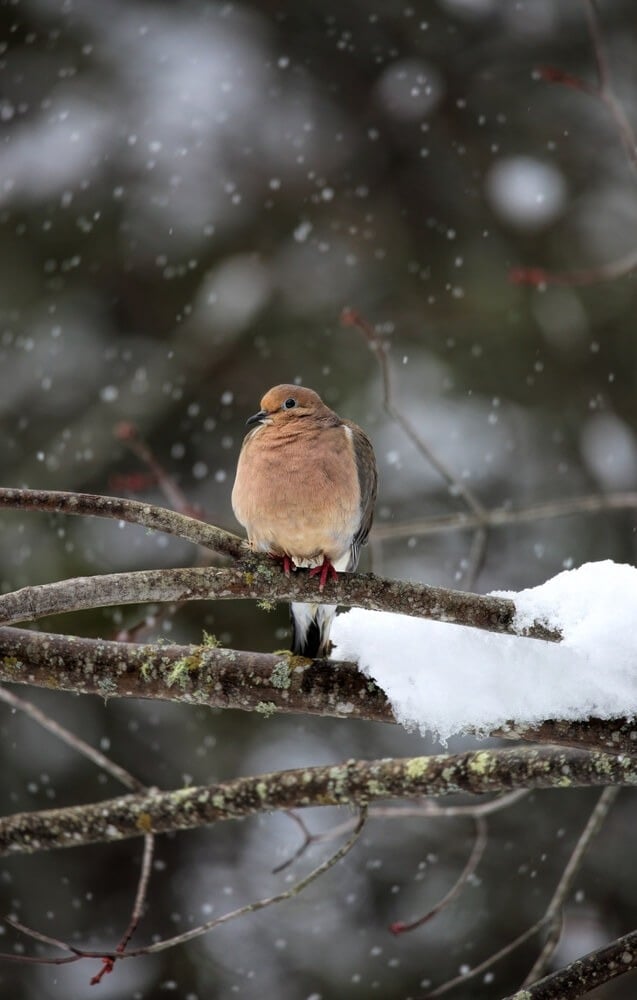
The gentle, mournful cooing of these sleek, tan doves is winter’s most peaceful soundtrack. Their melodies emanate from fence lines and bare branches at dawn and dusk. They’re ground-feeding specialists who hoover up spilled seeds beneath feeders with impressive efficiency. Their soft plumage and graceful movements bring a sense of calm to even the harshest winters.
- USDA Zones: Most of the US. Zones 3–10.
- Appearance: Soft gray-brown, plump, long-tailed birds. They have a gentle cooing call.
- Migration Habits: Mostly resident. Northern birds move south in winter.
- How To Attract: Scatter seed or use platform feeders with millet and corn.
Despite their delicate appearance, they’re remarkably cold-hardy. Their year-round presence makes them reliable indicators of a healthy habitat.
18. Abert’s Towhee
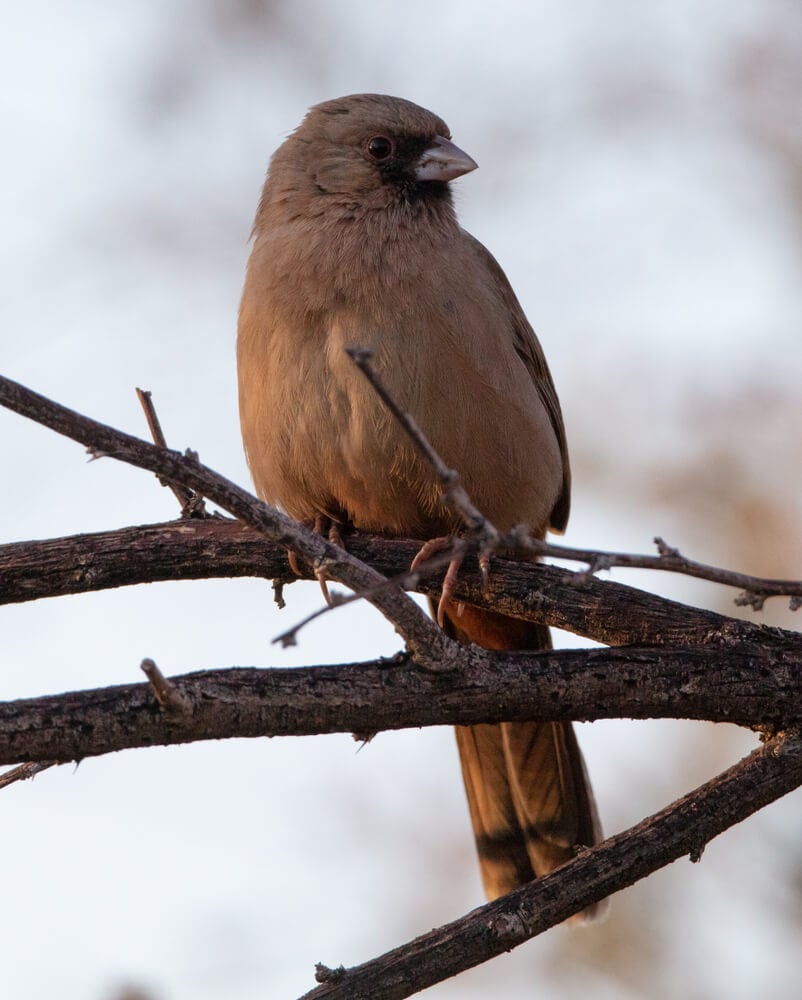
This cinnamon-brown Southwest visitor lacks the fancy plumage of its spotted cousin. But its thrush-like calls and secretive nature make it a special find for desert gardeners. Found scratching through leaf litter and mesquite thickets in Arizona and New Mexico, it’s perfectly adapted to arid winters where water sources and dense cover are at a premium.
- USDA Zones: Desert Southwest, Zones 8–10.
- Appearance: Brown towhees with cinnamon underparts and black around the bill.
- Migration Habits: Non-migratory desert residents.
- How To Attract: Scatter seed on the ground and maintain native shrubs.
Creating brush piles and maintaining native plantings will significantly increase your chances of hosting this epic (and underrated) regional treasure.
Read More – 11 Vital Ways To Support Beneficial Garden Bugs During Autumn And Winter!
19. White-breasted Nuthatch
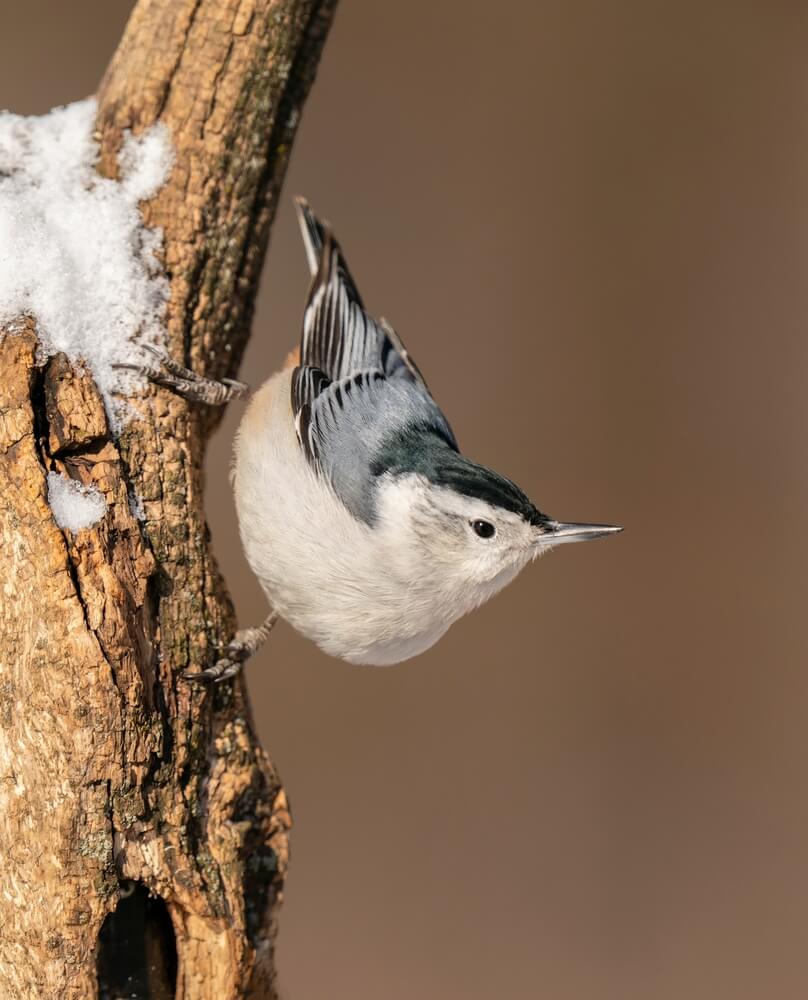
Behold! It’s nature’s most entertaining defier of gravity, the White-breasted Nuthatch. This blue-gray bird with a black cap and rusty undertail walks headfirst down tree trunks with nonchalant ease, hunting for insects other birds miss. Their nasal “yank-yank” calls echo through winter woodlands and backyards, and they’re enthusiastic visitors to suet feeders where they’ll wedge large pieces into bark crevices to hammer apart later.
- USDA Zones: Most of the US, Zones 3–9.
- Appearance: Blue-gray back, white face and underparts, short tail. Walks headfirst down trees.
- Migration Habits: Year-round residents often join mixed flocks.
- How To Attract: Offer sunflower seeds, peanuts, and suet near mature forests.
They’re also remarkable food cachers, hiding seeds in hundreds of locations and apparently remembering where they’ve stashed each one.
20. European Starling
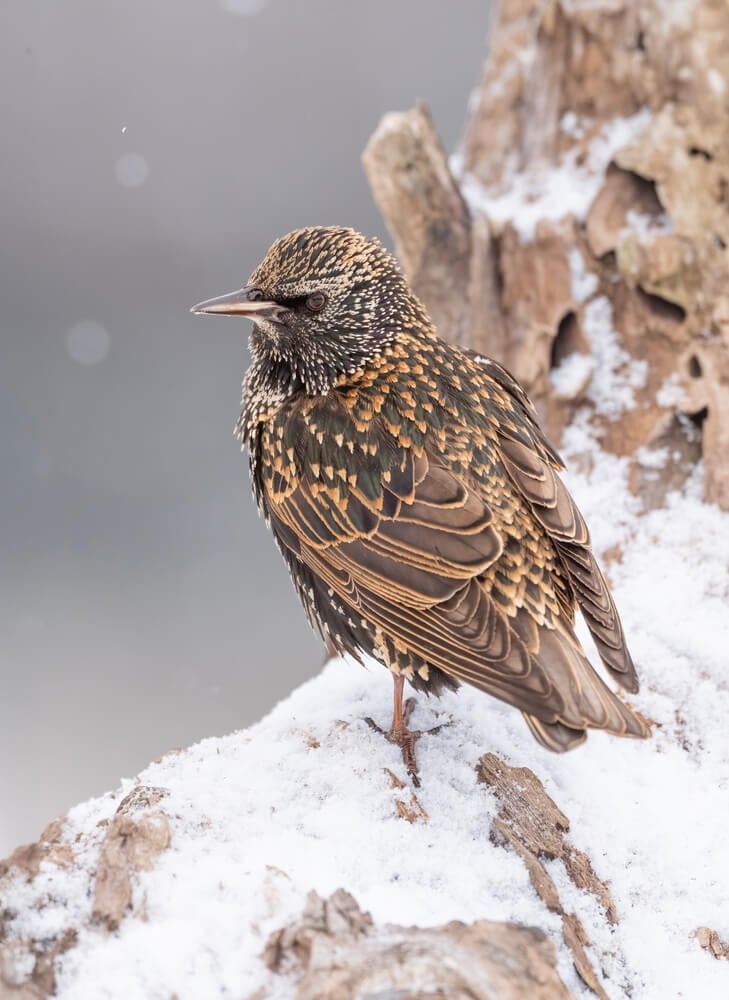
These non-native birds polarize opinion. They’re reviled by many for outcompeting native cavity nesters like bluebirds and woodpeckers. Yet also undeniably stunning in winter plumage when their metallic-sheened feathers are spangled with white tips like a starry sky. Their mimicry skills are exceptional. They can incorporate everything from hawk calls to car alarms into their repertoire. And their massive winter roosts create spectacle and controversy.
- USDA Zones: Entire US. Zones 2-10.
- Appearance: Iridescent blackish plumage with purplish or greenish sheen. Speckled in winter.
- Migration Habits: Year-round residents. They form large winter flocks.
- How To Attract: Visit feeders for suet, grain, and fruit (often aggressively).
While they’re agricultural pests in some contexts, they also consume enormous quantities of lawn grubs and other insects, providing some ecological value despite their invasive status.
21. American Goldfinch
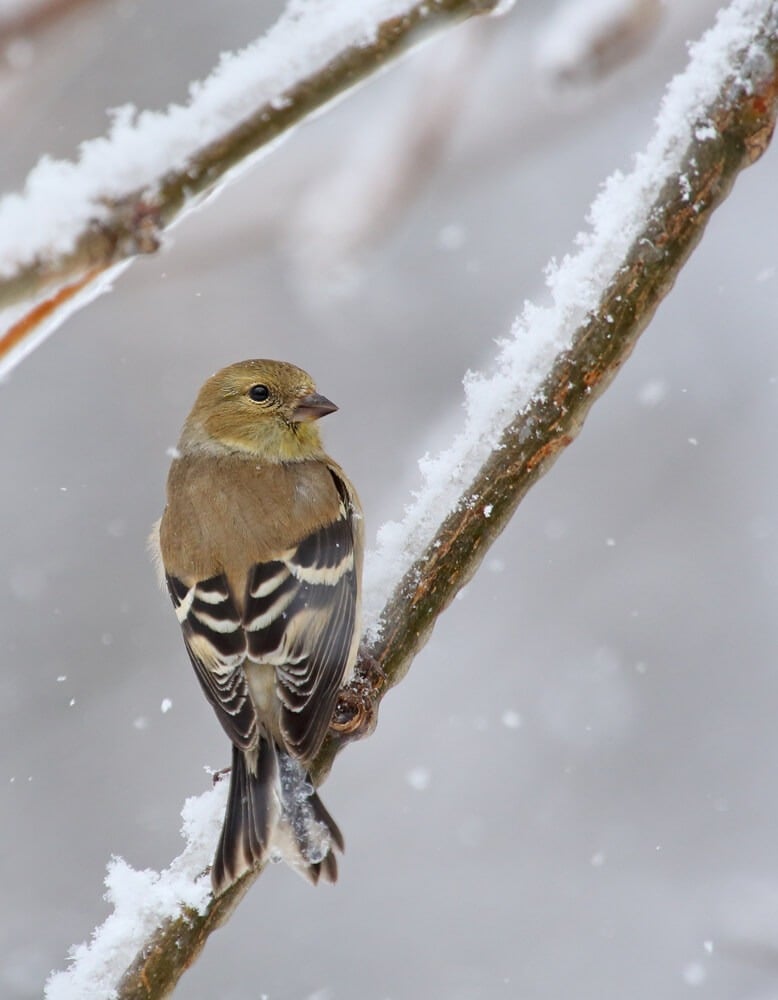
“Where did all my yellow birds go?” It’s the most common question birdwatchers ask in December. The answer is that they never left! In winter, these dazzling yellow birds molt into a humble, drab olive-brown “incognito” plumage to blend in with dormant thickets. (Their dark plumage helps them avoid hawks!) Look closely at your thistle feeder. You’ll recognize them by their distinctive black wings with white wing bars and their roller-coaster flight pattern accompanied by a cheerful “po-ta-to-chip” call.
- USDA Zones: Widespread across the US. Zones 3–9.
- Appearance: In winter, they are dull brown/olive with blackish wings and white wingbars. (No bright yellow!)
- Migration Habits: Many are year-round residents; northern populations move south to join them.
- How To Attract: Keep tube feeders stocked with Nyjer (thistle) or sunflower chips.
Save money on birdseed by practicing “lazy gardening.” Leave your coneflowers, sunflowers, and black-eyed Susans standing through winter. The goldfinches will cling to the dried heads and pick them clean for you.
Read More – 15 Hungry Carnivorous Plants That Devour Flies, Ants, And Bugs!
Conclusion
Your winter homestead is far from dormant. And this list barely scratches the surface of the breadth of remarkably feathered friends who might visit your backyard this winter. Just remember that every suet feeder stocked, every brush pile maintained, and every native berry shrub left standing helps provide a critical winter bird sanctuary for all!
Thanks for reading.
Have a great day.