
Why Chickens Start Eating Their Own Eggs (And How to Stop It)
Welcome! This article contains affiliate links, meaning I get a commission if you decide to make a purchase through my links, at no extra cost to you.
Finding a bunch of eggs broken and empty when you go to collect them is heartbreaking. One cracked egg can quickly turn into a habit, and once a few hens realize eggs are edible, things can go downhill fast.
The good news is this is a common problem, and in most cases, there’s a reason behind it that you can fix.
Why chickens start eating their eggs
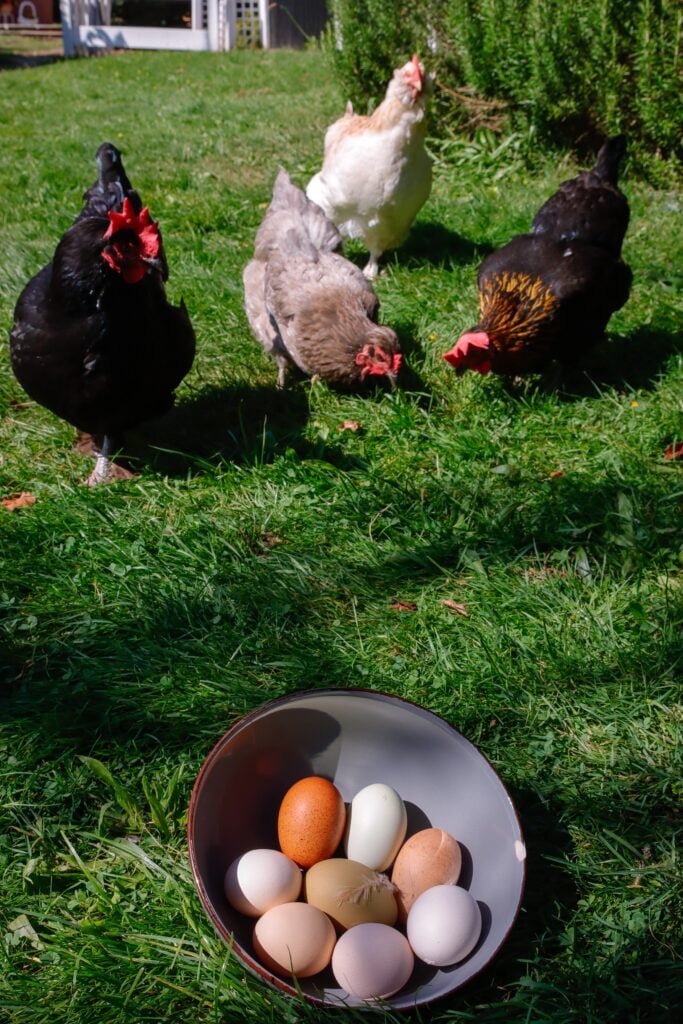
Sometimes it starts by accident. A hen lays a thin-shelled egg, another steps on it, and suddenly there’s a free snack sitting in the nesting box. Chickens are curious creatures. If something tastes good, they remember. And they’ll just about eat anything.
Other times, it might be a management issue. Here are the most common reasons why your chickens eat their own eggs.
1. A broken egg started the whole thing
This is probably the most common cause.
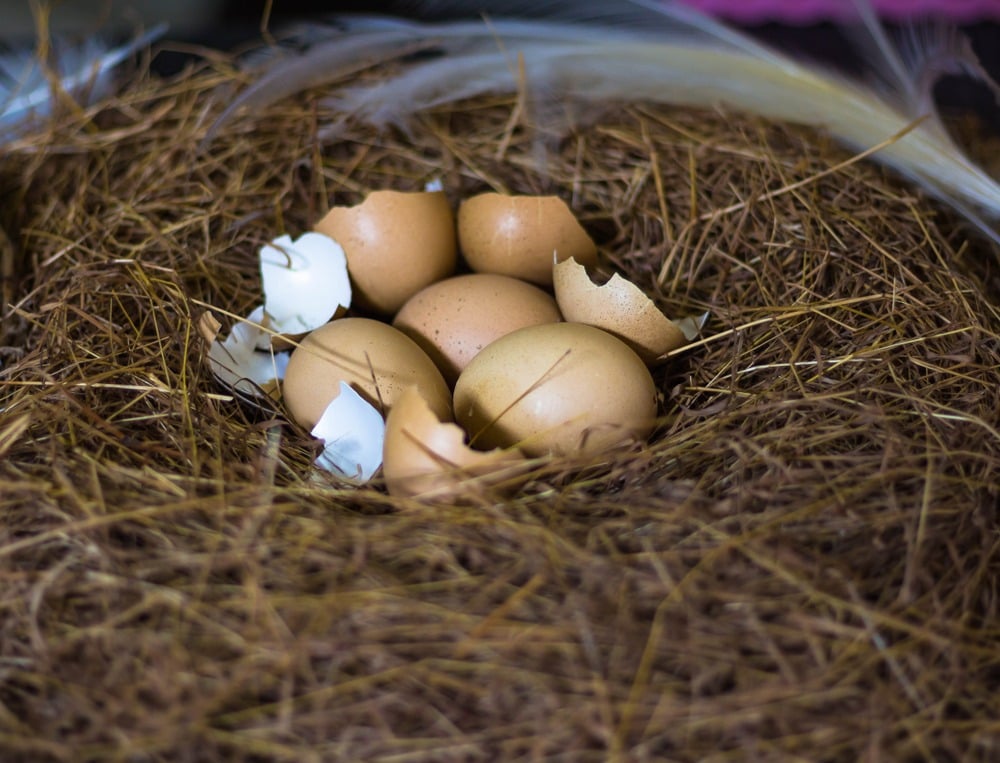
An egg cracks, a hen pecks at it, discovers it tastes pretty good, and that’s that.
If eggs are getting stepped on, laid in awkward spots, or breaking regularly, this can kick off the whole problem.
2. Not enough calcium
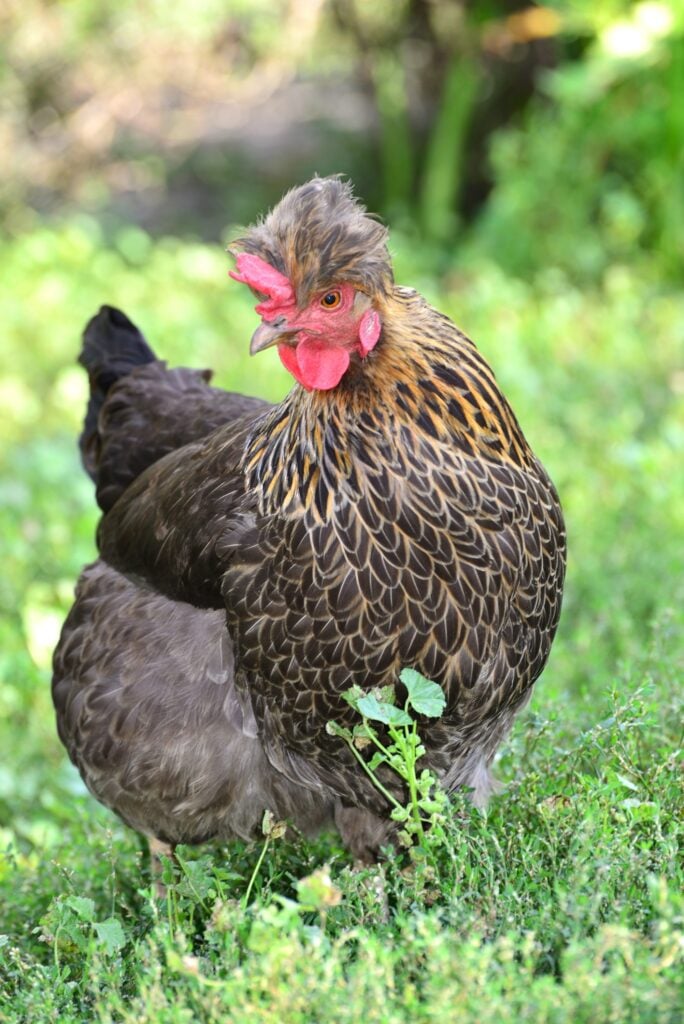
Laying hens need plenty of calcium to produce strong eggshells. If they’re short on calcium, shells can become thin and fragile, which means more cracked eggs and more temptation.
A quality layer feed should cover the basics, but many chicken keepers also offer free-choice oyster shell or crushed eggshells (baked first if you’re feeding them back).
Soft or thin shells are often your clue.
3. Diet imbalance
Calcium isn’t the only nutritional issue that can play a role.
If hens aren’t getting enough protein or their diet is all over the place with too many scraps and not enough proper feed, they may start seeking nutrients elsewhere.
Eggs are packed with protein and fat. Not ideal when they decide to source it themselves!
4. Boredom
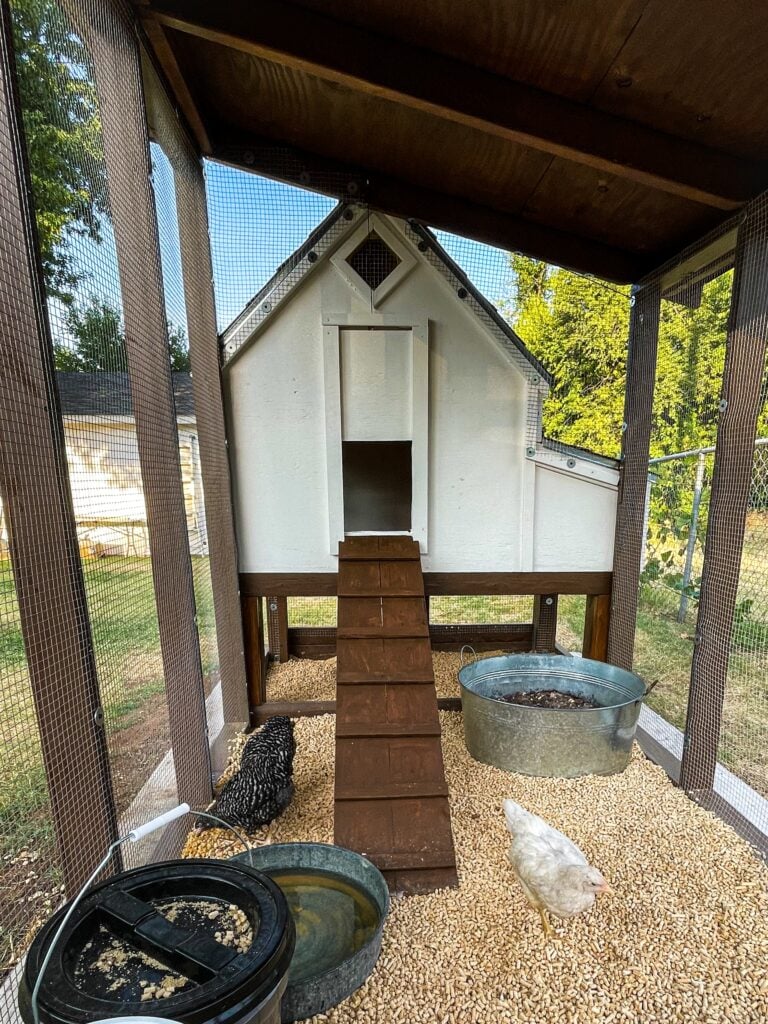
Bored chickens invent their own entertainment. And unfortunately, egg smashing can become one of those hobbies.
This is more common in confined flocks with little to do. If they’re stuck in a bare run all day with no scratching opportunities, no greens, no enrichment, and not much space, unwanted behaviors tend to pop up.
5. Eggs are sitting too long
This is often my problem. I might go a couple of days between collections, and if eggs sit in nesting boxes for hours, there’s simply more opportunity for trouble.
A hen jumps in to lay, another steps on an egg, or the eggs just get too crowded to stay in one piece.
6. Crowded nesting boxes
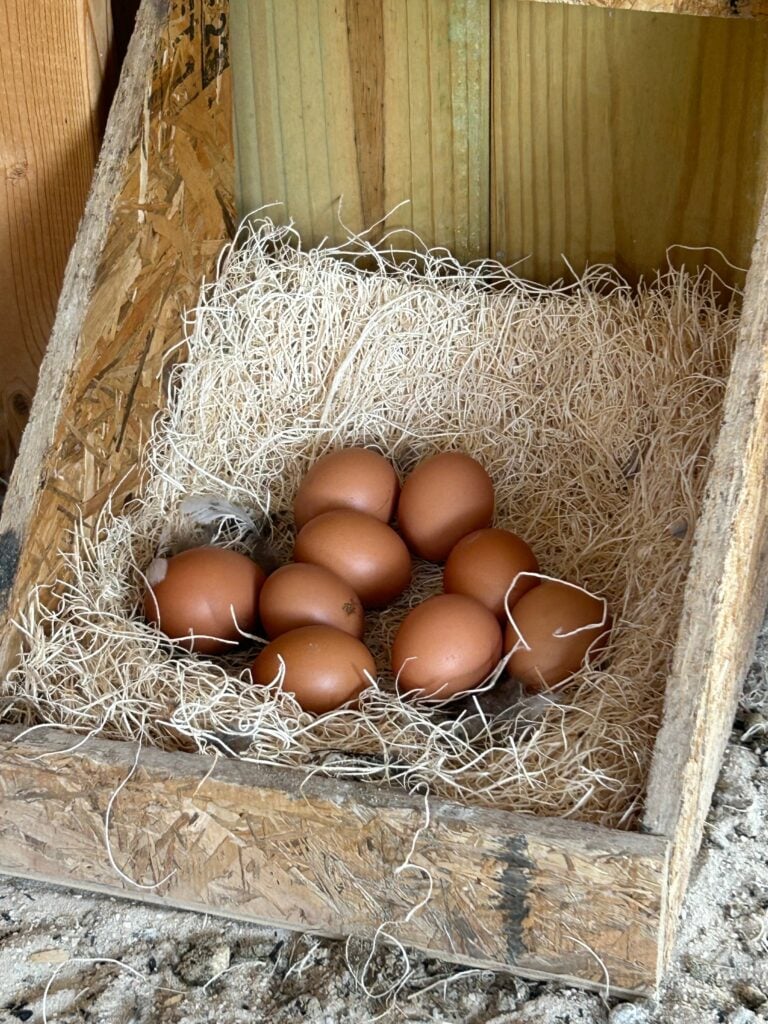
Too many hens trying to use too few nesting boxes can also lead to broken eggs.
There’s jostling, stepping, awkward laying positions, and cracked shells.
A rough guide is around one nesting box for every 3 – 4 hens, though some flocks seem determined to all use the same box anyway. Mine love the middle one… And generally only the middle one.
7. Stress
Stress can trigger all sorts of odd flock behavior.
Heat, overcrowding, bullying, predators, constant disturbances, or sudden changes can all throw chickens off. I sneezed the other day and all my hens went into a frenzy!
A stressed flock is more likely to develop habits you don’t want.
8. Nest boxes that are too bright or exposed
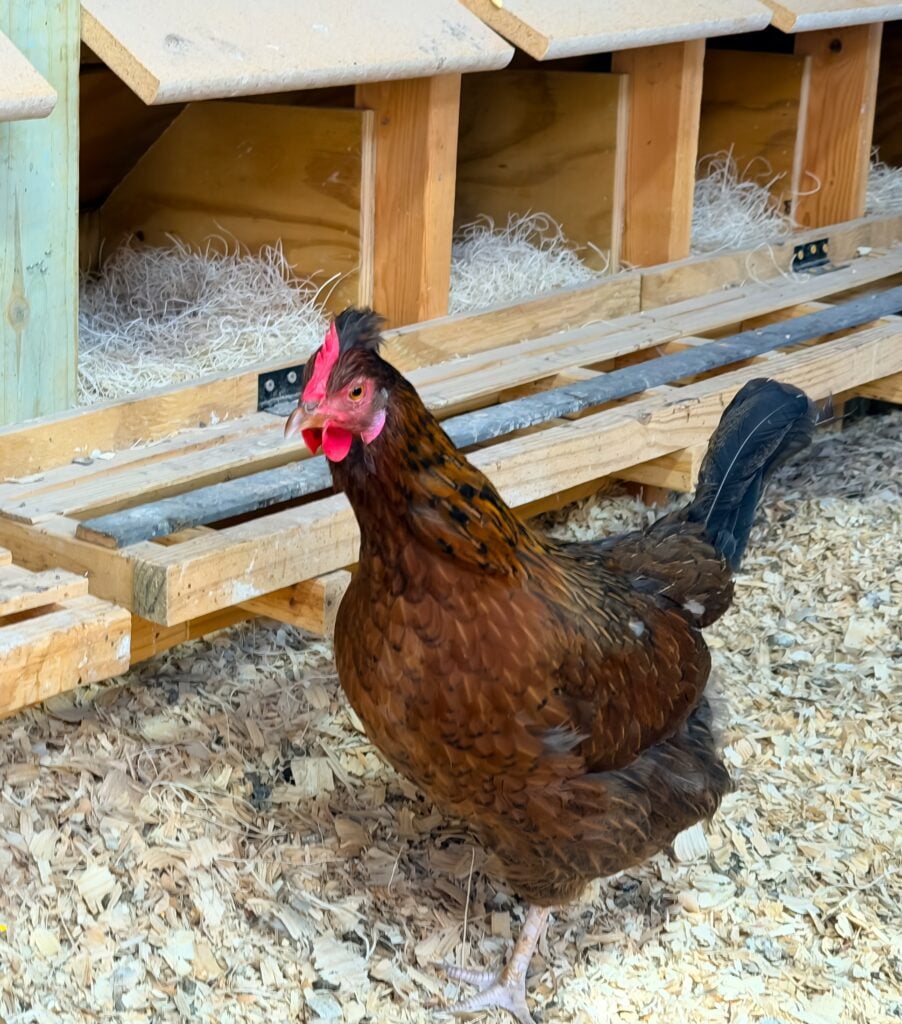
Chickens like nesting areas that feel safe and tucked away.
If nesting boxes are too bright, exposed, or in a busy area, hens may spend less time calmly laying and more time fussing around, which increases breakage.
A darker, quieter setup often helps.
9. Hunger
Obviously, you’d always try to avoid this situation, but imagine you didn’t fill the food containers quite as quickly as you planned. Or, you fed your chickens a little later than usual. I find that, when they’re hungry (and this doesn’t take much), they’ll start getting adventurous with all sorts of ‘edibles’. Including eggs.
How to stop chickens eating eggs
The trick is acting quickly before the habit spreads! Here’s how to go about it.
Collect eggs more often
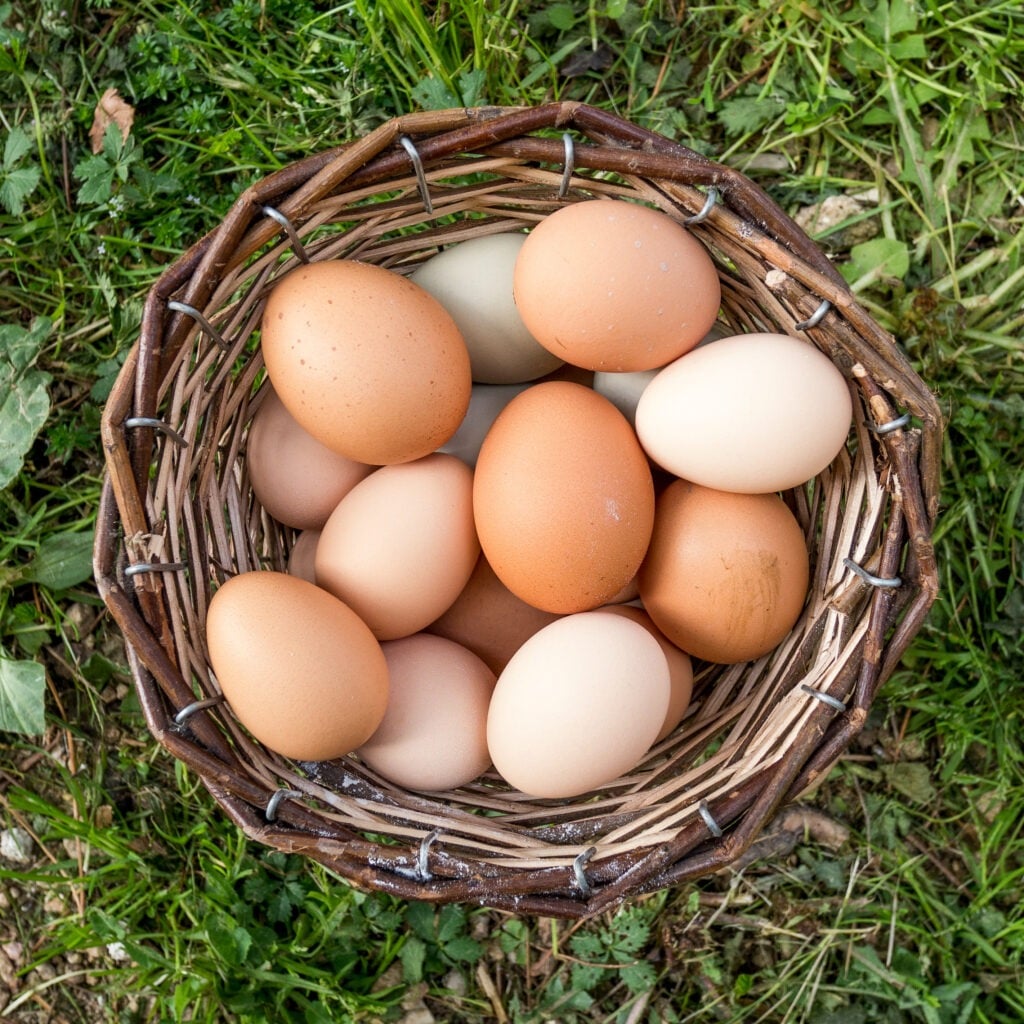
This is the easiest first fix. If possible, collect your eggs once in the morning and again later in the day.
Less time in the nest means fewer opportunities.
Check their feed
Make sure your hens are on a proper layer feed if they’re laying regularly.
If you’re feeding lots of scraps, grains, or random extras, their diet may be out of balance. Protein, in particular, is a tricky one to get right with scraps alone.
Offer extra calcium
A dish of oyster shell is an easy option. Hens that need it will usually help themselves. I have a tiny dish that you can hang on the mesh and I keep it filled with oyster shell. They don’t go through it very quickly, but I feel it is helpful.
Reduce boredom
This one gets overlooked a lot.
Give your chickens things to do:
- hanging greens
- scratch scattered through bedding
- logs to hop on
- access to pasture or free ranging if practical
- I love chucking a bale of mulch in their pen so they can go and scratch. Plus, they spread it out for you!
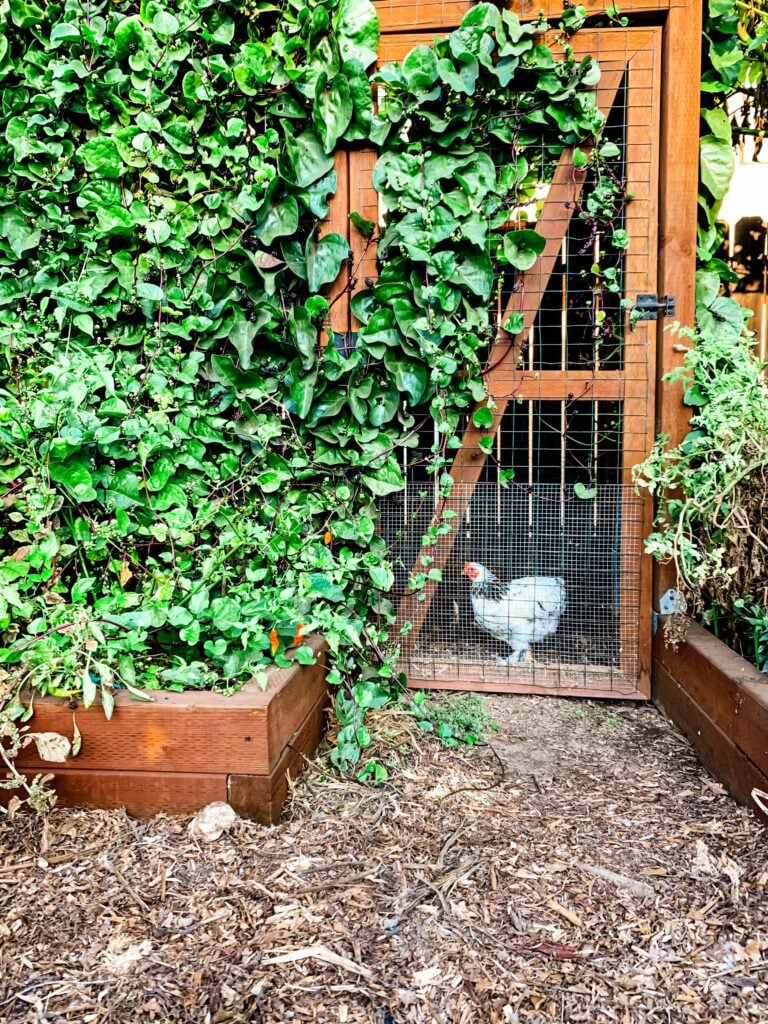
- Grow plants (especially edibles they love) around the pen so they can peck at it
- Hang fruit a little higher than ‘reach’ height so they need to do a little jump to get it
- Another great thing, if you’re comfortable with it, is to hang a mesh bag with meat above the run. Flies lay eggs, the maggots drop down, and the chickens are greatly entertained. I put a pallet underneath it so it gets a little trickier to get the maggots.
Busy chickens are generally better behaved chickens.
Add more nesting space
If boxes are crowded, add another.
Even if they all insist on using one favorite box, having options can help. I’ve added all sorts of things as nesting boxes to see if they like it – tyres, an old cupboard, etc.
Make nesting boxes darker
A bit more privacy can really reduce pecking and fussing.
Curtains over nest boxes can help in some setups. Although, in our hot climate I find that curtains are too hot. If you’re in a cool climate, these could be a great idea!
Use fake eggs
Ceramic eggs, wooden eggs, or even golf balls can discourage pecking. This actually works surprisingly well, especially if you take the real eggs away promptly.
The idea is simple: pecking becomes unrewarding.
Consider roll-away nesting boxes
If you’ve got determined offenders, roll-away nest boxes can solve the problem by moving eggs out of reach after laying.
Bit more setup, but effective. The only thing I don’t like about it is when I’m ready for baby chicks. You need to plug the hole so the hens can sit on the eggs without them rolling away.
Will chickens stop once they start?
Sometimes yes. If it began with broken eggs or a temporary issue, fixing the cause often solves it. In my situation, increasing the variety of food and keeping them busy generally stops them from eating the eggs.
If it’s become an established habit, it can be harder to break. Some hens become repeat offenders.
If one bird is clearly the culprit and nothing works, separating her may be the only real fix.
It’s Frustrating but fixable
Egg eating is frustrating, but it’s usually fixable.
Most of the time, it comes back to broken eggs, boredom, diet issues, or management setup.
The sooner you deal with it, the easier it is to stop before the whole flock gets ideas

Fill your garden with fresh vegetables and your kitchen with homegrown food. This heirloom seed collection includes 32 popular varieties, from tomatoes, cucumbers, and lettuce to pumpkins, corn, beans, and carrots. It's an easy way to start a productive vegetable garden, grow more of your own food, and enjoy harvests that taste far better than store-bought produce. Perfect for anyone dreaming of a backyard packed with fresh vegetables!



What’s worked for you?
Have something to add? Share your experience below. Whether you’ve been gardening, raising animals, or making things yourself for years, your tips might help someone else.