
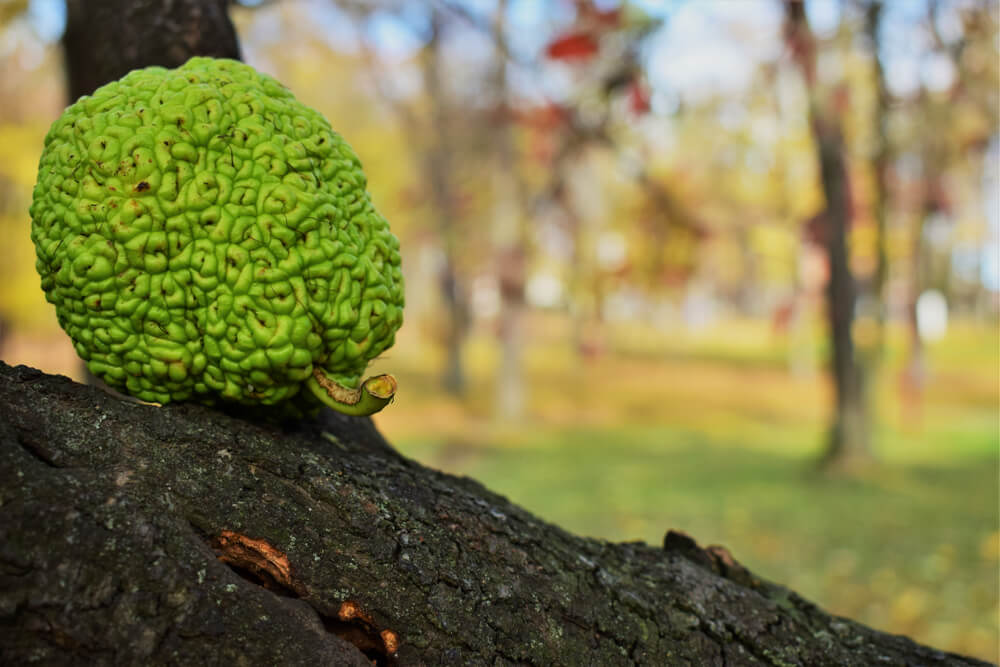
How To Grow Hedge Apple Trees (Osage Oranges) From Seeds Or Transplants!
Welcome! This article contains affiliate links, meaning I get a commission if you decide to make a purchase through my links, at no extra cost to you.
So, you’ve decided to grow some hedge apples (also known as Osage orange trees) – an excellent choice! Whether you’re planning a living fence, stocking up on dense firewood, or want those quirky brain-shaped fruits for fall decor, you’ve got to start somewhere. Let’s walk through your options for getting these tough-as-nails trees established on your property.
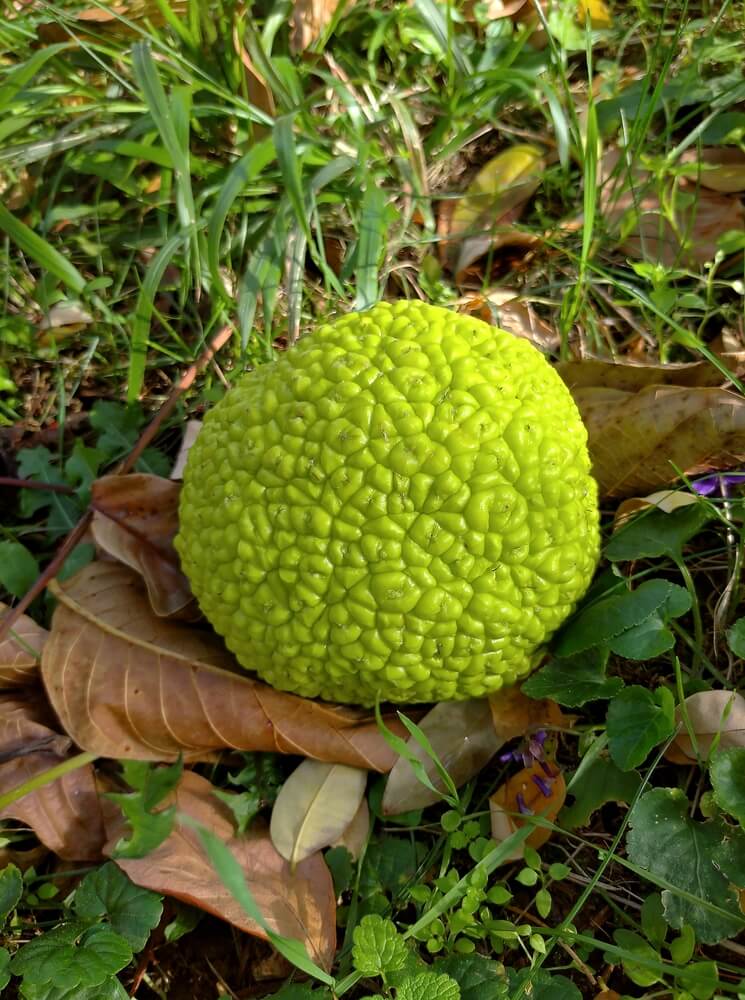
We’ll also discuss some of the lesser-known benefits of hedge apples. And how to grow them from seed!
Sound good?
Then, let’s grow some wild fruits. Shall we?
Growing Osage Orange Trees From Seed

The reality check. Growing hedge apples from seed is definitely the slow road. Really slow. Expect to wait three to five years before you see a decent-sized hedge apple tree! And even longer before fruit production kicks in. That said, there’s something deeply satisfying about nurturing a tree from a tiny seed all the way to a massive, gnarly specimen. Keep in mind that buying seedlings or transplants can save you years of waiting!
Step 1 – Collect And Extract Your Seeds
In fall (September through November), grab some hedge apples from beneath a female Osage orange tree. Wear gloves – that sticky latex sap is no joke! Cut open the fruits and pull out the seeds, then rinse them thoroughly to remove all the pulp. You’ll get dozens of seeds from just one fruit.
Step 2 – Cold Stratification (The Winter Nap)
Osage orange seeds need a cold period to break dormancy – Mother Nature’s way of preventing premature germination. Mix your clean seeds with damp (not soaking) sand or peat moss in a ziplock bag and refrigerate them for 60 days. Check weekly to ensure they remain moist but not moldy.
Step 3 – Pre-Soak And Plant In Spring
After stratification, soak seeds in room-temperature water for 24-48 hours. Plant your hedge apple seeds roughly 1 inch deep in well-draining soil after your last frost date. You can start the hedge apple seeds in tiny pots or directly in the ground. Keep your seeds consistently moist until germination (usually 2-4 weeks).
Step 4 – Thin and Transplant
Once seedlings reach 6-8 inches tall with several sets of true leaves, thin out the weakest ones if you’ve planted multiple seeds together. If you started them in pots, transplant them to their permanent location when they’re about a foot tall. Osage orange trees develop deep taproots quickly, so don’t wait too long!
Read More – The Ultimate Guide To Growing Pawpaw Trees – From Seed To Backyard Harvest!
Growing Osage Orange Trees From Cuttings
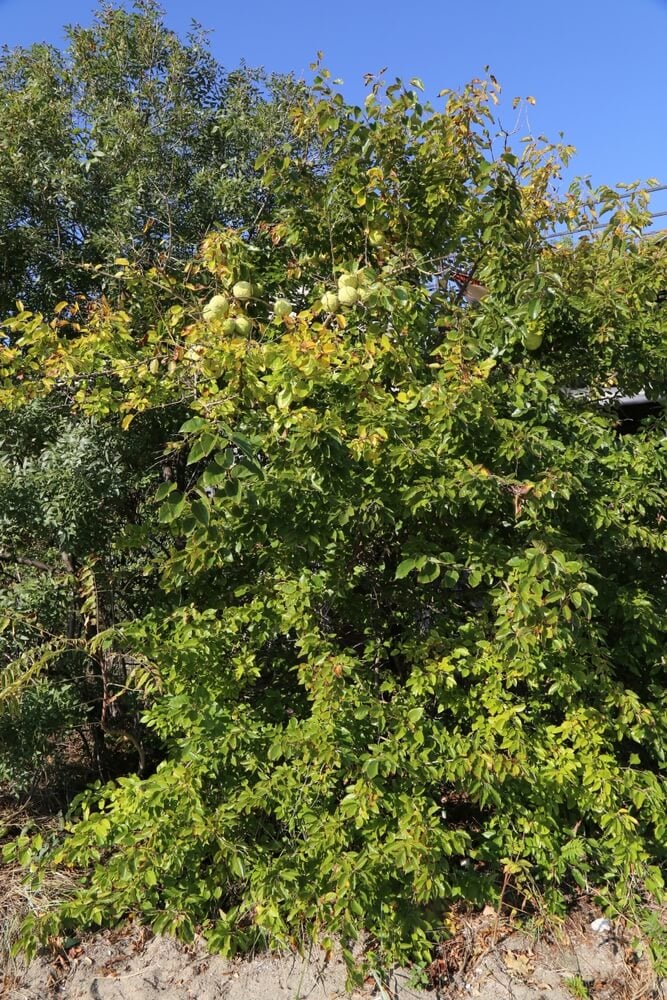
The success rate of hedge apple cuttings is very low. But one of my friends asked me how to root hedge apples, so here’s my take. If you’re feeling experimental, this is how I would try it. You might end up with a few new trees faster than waiting on seeds, and even a single success feels like a win.
Step 1 – Take Hardwood Cuttings In Dormancy
In late winter (January through March), when the trees are fully dormant, select healthy one-year-old branches. Cut six 10-inch sections, pencil-thick, with several buds on each. Make your Osage orange tree cuts at a roughly 45-degree angle, just below a node. Take more than you think you need. Not every cutting will root.
Step 2 – Prepare And Root Your Cuttings
Dip the cut end of the hedge apple tree cutting in rooting hormone powder. Plant the cuttings about halfway deep in containers filled with a fifty/fifty mixture of peat moss and perlite in a well-draining outdoor bed. If rooting hedge apples outdoors, choose a spot with morning sun and afternoon shade. Consider covering your hedge apple cuttings with a clear plastic dome or bag. Doing so helps maintain humidity levels.
Step 3 – Provide Protection And Patience
Indoors, place your growing containers in bright, indirect light. Outdoors, protect from wind and extreme cold. A cold frame works perfectly. Mist regularly to keep humidity up. Roots typically begin to form within 6 to 10 weeks. Look for new leaf growth. That is your signal that the cutting is taking place. By fall, your rooted cuttings should be ready to move to their permanent home.
Pro Tips And Reality Check
- Soil temperature matters. A temperature range of 65 to roughly 75°F is ideal for rooting. Cooler soil will slow things down.
- Handle roots carefully when transplanting. Keep soil intact to avoid damage.
- Even with perfect technique, expect only a fraction of your cuttings to survive. Plan for a success rate closer to 5-20 percent. Anything higher is a lucky break.
Cloning hedge apple trees is not easy, nor is it a shortcut. But if you enjoy a little experimentation and want to try cloning hedge apples, it is worth a shot. Even one successful cutting feels like a small triumph.
Read More – How To Grow Gorgeous Japanese Maple Trees From Seed In Your Home Garden – The Ultimate Guide!
The Easiest Route? Nursery Transplants.
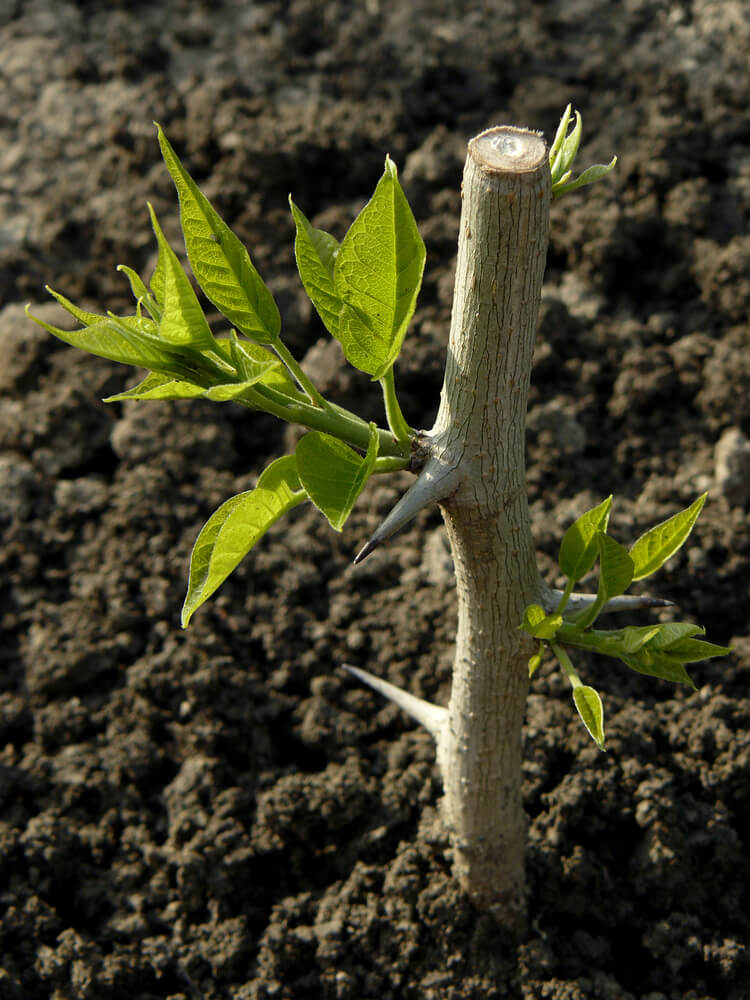
Want to get straight to growing without the science experiment? Then buying nursery-grown Osage orange trees is perfectly legit. You’ll pay anywhere from $10 to $40 per tree, depending on the size, but you’re getting a healthy, established plant that’s already 2 to 4 years old. It’s plug-and-play gardening. Less romantic than growing from seed, maybe not as satisfying as successfully rooting cuttings, but you’ll have a productive hedge or firewood source years sooner. Sometimes the direct approach is the innovative approach!
Osage Orange Trees Growing Requirements
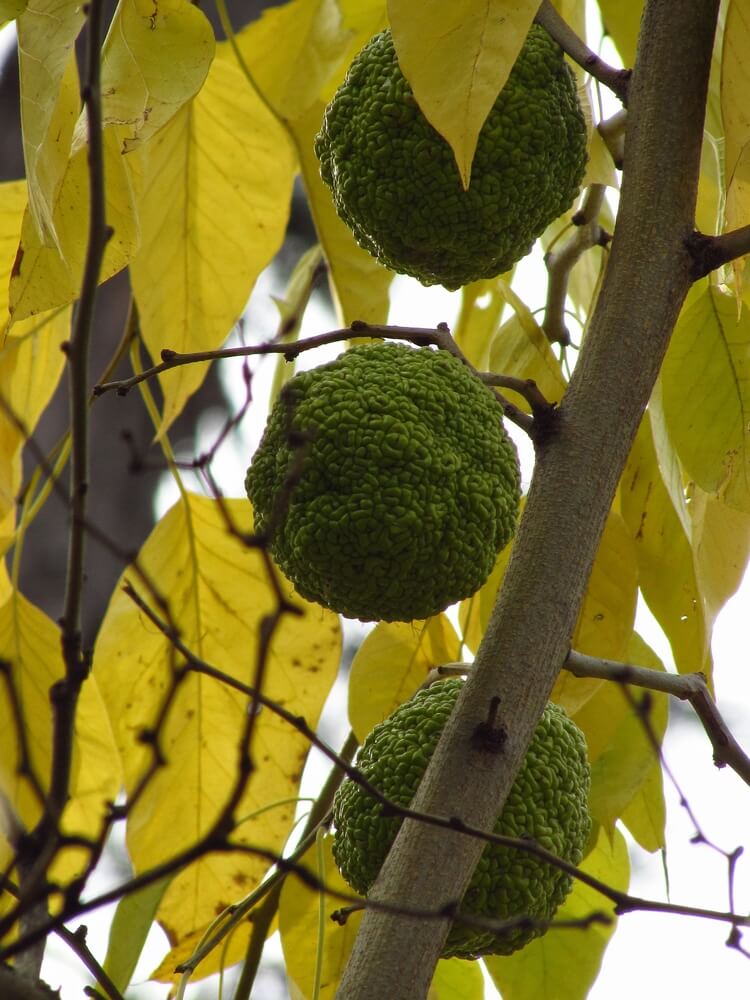
Alright, you’ve got your hedge apples in the ground – now let’s make sure they actually thrive. The good news? Osage orange trees are about as tough as plants come. These survivors tolerated the Great Plains long before humans showed up, so they’re not particularly fussy. That said, understanding their preferences will help you get the best growth, whether you’re building a windbreak or planning for future firewood.
Sunlight
Full sun is where these trees shine. Osage orange trees want at least 6 to 8 hours of direct sunlight daily. However, they’ll genuinely appreciate all-day sun if you can give it to them. Sure, they’ll tolerate partial shade. They’re survivors, after all. But you’ll get leggy, slower growth, and far fewer of those distinctive hedge apples. If you plant a hedgerow for privacy or livestock containment, space them so they won’t compete with larger trees. Bottom line? More sun equals denser growth, stronger wood, and better fruit production.
Climate
Hardiness zones 4-9, baby! These trees defy the challenges of temperature extremes. Osage orange trees handle scorching summers (up to 110°F+), bitter cold winters (down to -30°F), ice storms, drought, and pretty much anything Mother Nature throws at them. They’re native to Texas, Oklahoma, and Arkansas, but have naturalized across most of the lower 48 states. The sweet spot is zones 5-8, where they grow most vigorously, but don’t let being slightly outside that range stop you. Once established (after year 2-3), they’re virtually indestructible.
They tend to fruit best in areas that get a normal winter. But they do not have a strict chilling requirement like orchard trees. Deep South Florida might still be pushing it, but the issue is heat and climate, not a lack of chilling hours.
Soil + Fertilizer
Here’s where Osage orange trees really earn their “tougher than nails” reputation. These mighty trees grow in almost anything! Clay, loam, sandy soil, rocky ground, and even alkaline soils don’t bother them. Their native habitat was limestone-rich prairie soils. Therefore, they thrive in slightly alkaline conditions (pH 6.0 to approximately 8.0). This tolerance sets them apart from most fruit trees. The one dealbreaker? Standing water. These trees absolutely require well-draining soil – their deep taproots will rot in soggy conditions.
As for fertilizer, established hedge apples basically laugh at the concept. Osage orange trees thrive in lean soils that would starve out other species.
For young transplants (within the first 1-2 years), you can apply a slight dose of organic or balanced fertilizer (10-10-10) in early spring to encourage establishment, but this is hardly necessary. Once they hit year three, skip the fertilizer entirely unless your soil is truly depleted. Over-fertilizing actually produces weak, overly fast growth that’s more susceptible to storm damage. Let these trees stay hungry and mean – that’s what makes their wood so dense and valuable.
Pollination
You’ll need both a male and female tree if you want those signature hedge apples. Osage orange trees are dioecious. That means individual trees are either male or female, but not both. Only female trees produce the big, bumpy, brain-looking fruits, but they need pollen from a male tree to make it happen. The flowers aren’t showy (small, greenish clusters that appear in late spring), but they’re wind-pollinated, so your trees can be up to a mile apart and still do the deed.
Now, here’s the pollinator angle. The flowers aren’t exactly bee magnets like apple blossoms. However, they do attract some native bees and small pollinators that feed on the pollen, particularly beneficial solitary bees and hoverflies. It’s not a pollinator powerhouse. But it’s a modest contributor to your local ecosystem. If you’re only planting for firewood or as a living fence and don’t care about fruit, you can plant all males – they actually grow slightly faster and won’t drop those messy hedge apples all over your property each fall. But where’s the fun in that?
Watering
Water them like you mean it for the first year, then forget they exist. During the first growing season, young Osage orange trees require consistent moisture to establish their legendary deep roots – we’re talking about weekly deep watering (approximately 1-2 inches) if rainfall doesn’t cooperate. By year two, you can significantly reduce your watering. By year three, you’re basically done – established hedge apples are extremely drought-tolerant thanks to taproots that can reach 20+ feet down.
In fact, overwatering mature Osage orange trees is more harmful than neglect. Soggy soil encourages root rot and shallow root development, which defeats the whole purpose of growing these indestructible specimens. During a severe drought, established trees might show some leaf drop or slowed growth, but they’ll bounce back immediately when rain returns.
Read More – How To Grow Epic Fig Trees From Seeds Or Cuttings – The Ultimate Guide!
Osage Orange Trees Planting And Growing Schedule
Here are the critical dates that all Osage orange tree growers should be aware of.
April – Prime Planting Time
April is your golden window for planting bare-root nursery stock or transplanting rooted cuttings. The soil is warming up, but trees are still dormant or just beginning to break bud, which minimizes transplant shock. Get them in the ground early in the month if possible – those taproots need time to establish before summer heat hits. April is also when you’ll start seeing small greenish flower clusters emerge on mature trees.
May – Establishment Mode
Your newly planted Osage orange trees are waking up and pushing new growth – keep that soil consistently moist with weekly deep watering. Mature trees are flowering now (usually mid to late May), with males releasing pollen and females developing tiny green fruit nubbins. Apply a two or three-inch layer of mulch around young trees to conserve moisture and suppress weeds. But keep the mulch away from the trunk to prevent rot.
June – Growth Spurt Season
Hedge apples are in full beast mode now, putting on serious vegetative growth. Young trees can shoot up 3-4 feet this month alone under ideal conditions! Continue watering your first-year transplants weekly, and monitor for any pest pressure (although osage orange trees rarely experience serious issues). If you’re training them as a hedge, you can start light shaping cuts on established trees, but avoid heavy pruning in summer heat.
July – Fruit Development Begins
Those little green nubbins on female trees are swelling into recognizable hedge apples now, though they’re still hard and green. July is peak drought season in many areas, so maintain watering for young trees. Established specimens should be fine, as they can tap into deep soil moisture. The thick, glossy leaves provide excellent shade and privacy screening now. Minimal maintenance required – enjoy watching them grow.
August – Maintain and Monitor
The hedge apples on female trees are getting bigger (softball-sized by month’s end) but still green and rock-hard. Continue watering young trees if rainfall is sparse, but you can start tapering off as they toughen up heading into fall. Growth begins slowing as trees sense shorter days. August is actually a decent month for taking semi-hardwood cuttings if you want to propagate, although success rates aren’t as high as those of winter hardwood cuttings.
September – Harvest Season Approaches
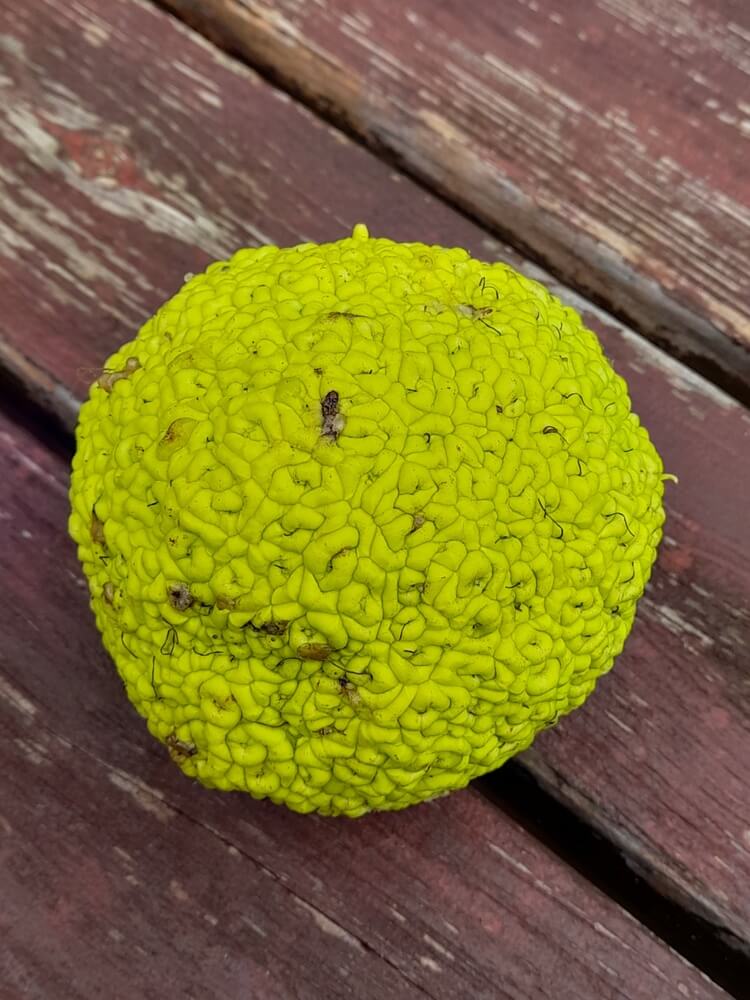
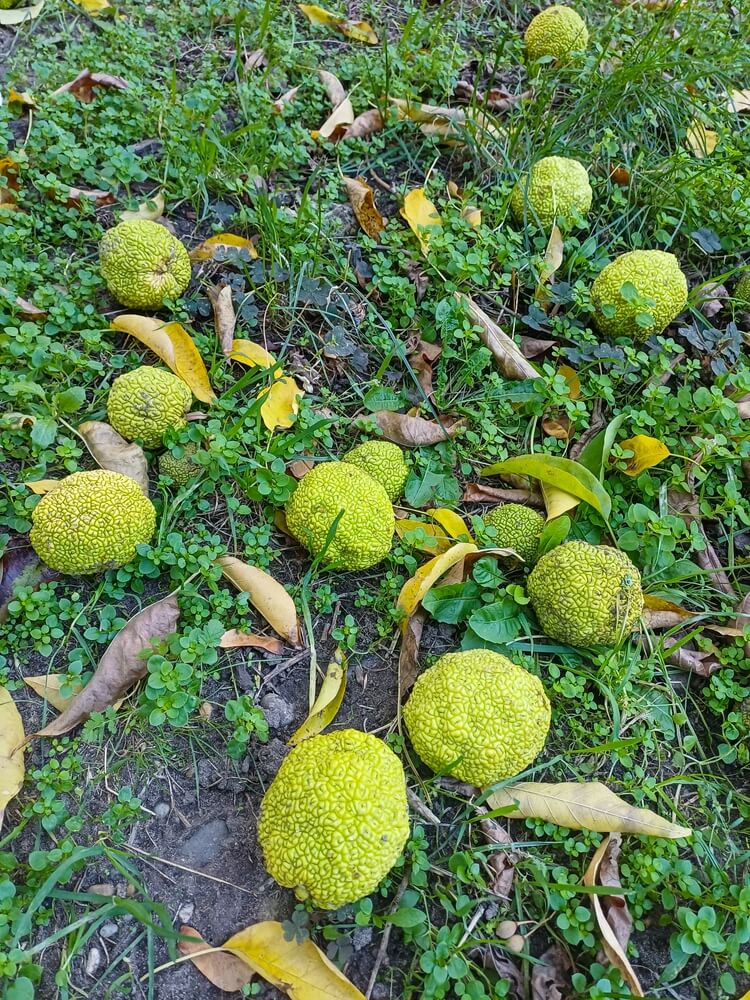
Hedge apples are reaching full size (4-6 inches in diameter) and starting to shift from bright green to that characteristic yellow-green color as they ripen. They’ll begin dropping from female trees late this month through October – Nature’s way of reseeding. If you’re collecting them for pest control, crafts, or decor, grab them as soon as they fall for the freshest specimens. Leaves are still green, but growth has essentially come to a halt for the year.
October Through Winter – Dormancy And Planning
Hedge apples are fully ripe and drop on the ground unexpectedly like bumpy, brain-shaped bombs. Watch your head! As the yellow leaves fall, they reveal the tree’s gnarly, thorny architecture (great for winter interest). October is prime time for collecting seeds if you want to grow more trees next spring – remember, they need cold stratification. Late winter (January-March) is ideal for taking hardwood cuttings and for any major pruning or shaping work. Once established, these trees require virtually zero winter care – they’re tougher than you are.
Read More – 17 Beautiful Pollinator Trees That Support Bees, Butterflies, And Wildlife!
Real-World Uses of Osage Orange Trees
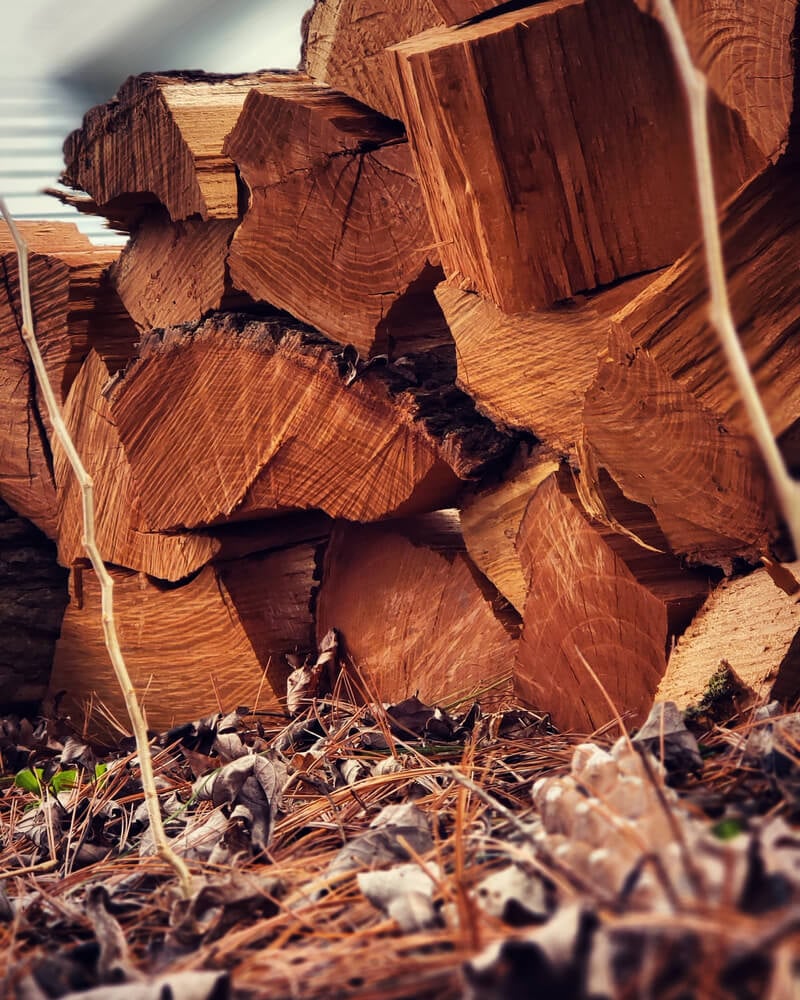
So you can’t eat them, but that doesn’t mean hedge apples are useless. In fact, these trees are ridiculously versatile in ways that have nothing to do with your dinner plate. Let’s start with firewood, because this is where Osage orange absolutely dominates.
The wood is incredibly dense with one of the highest BTU ratings of any North American hardwood. We’re talking 32.9 million BTUs per cord. That blows away oak, hickory, and pretty much everything else in your woodpile. It burns hot, slow, and clean with minimal smoke. The catch? It’s so hard that it’s genuinely tricky to split, even with a hydraulic wood splitter, so plan accordingly.
Then there’s the privacy hedge angle, which is why these trees earned the nickname “hedge apple” in the first place.
Those gnarly, thorny branches create an impenetrable living fence that livestock won’t cross and intruders won’t enjoy climbing through. Settlers planted them in rows across the Great Plains before barbed wire existed, and many of those original hedgerows are still standing today. Speaking of history, Osage orange wood was prized by Native Americans for making bows because it’s both flexible and powerful.
It’s also rot-resistant, making it ideal for fence posts that can last 50+ years or more in the ground without treatment. And finally, those bizarre brain-shaped fruits make surprisingly cool fall decorations. They last for months without rotting, and their bright chartreuse color and bumpy texture add serious visual interest to autumn displays.
Some homesteaders claim they repel spiders and cockroaches. However, the scientific basis for this is questionable. Either way, they’re conversation starters.
Wildlife and the Weird Fruit
Here’s the thing about hedge apples and wildlife. It’s a complicated matter. Those showy fruits should be a wildlife magnet, but pollinators give Osage orange trees the cold shoulder.
Bees, butterflies, and hummingbirds show minimal interest because the small, greenish flowers aren’t particularly attractive or nectar-rich.
You might see a few native bees working the blooms for pollen in late spring, but it’s nothing like the pollinator party you’d get from fruit trees or wildflowers.
The fruits themselves are even weirder from a wildlife perspective.
Birds might pick at the seeds if a fruit splits open, but this is rare. They generally ignore hedge apples unless food is extremely scarce. Squirrels are the most reliable customers, gnawing through the tough exterior to get at the seeds, and deer will nibble on fallen hedge apples when other food is scarce, though they clearly don’t love them.
The truly bizarre part is how slowly these fruits decompose. Drop a hedge apple on the ground in October, and it’ll still be sitting there, mainly looking intact, the following spring.
The fruits are huge, tough, and full of seeds in a way that makes no sense for modern wildlife. Scientists believe they evolved to be eaten and dispersed by Pleistocene megafauna such as mammoths and giant ground sloths.
Osage orange trees are producing fruit for animals that no longer exist, which might be the most endearingly pointless thing in nature. The fruits sit there, waiting for a mammoth that’s never coming.
Common Mistakes When Growing Osage Orange Trees
Even though hedge apples are practically indestructible, there are a few rookie mistakes that can turn your dream hedge into a frustrating mess. Here’s what to avoid.
Planting Them Way Too Close Together.
Look, I get it – you want that impenetrable living fence yesterday, and cramming osage orange trees together seems like the fast track to privacy.
But these beasts can easily grow to 30-50 feet tall with sprawling canopies just as wide if left unpruned. Plant them 10-15 feet apart minimum for a managed hedge, or 20-30 feet if you’re growing specimen trees for firewood.
Anything closer and you’ll end up with a tangled, stressed-out mess where trees are competing for light, water, and nutrients. They’ll grow tall and spindly, trying to outcompete each other instead of filling in densely at the base.
Thinking You’re Going To Eat Those Hedge Apples
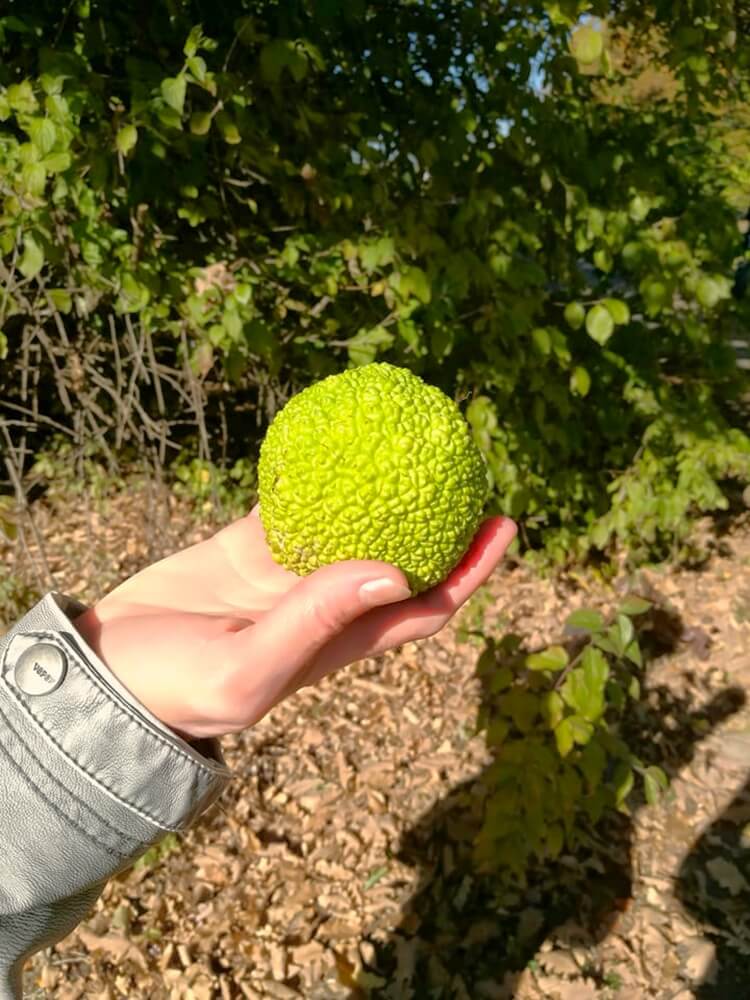
Here’s the truth bomb. Those lumpy green fruits are absolutely, completely, 100% inedible to humans. They’re not “acquired taste” bad – they’re bitter, tough, sticky, and will give you a stomachache if you’re determined enough to try.
The white, milky sap can even irritate your skin. Osage oranges got the “apple” nickname purely because of the fruit’s round-ish shape, not because of any culinary value.
Think of them as functional decor – they supposedly repel spiders and insects (debatable), make interesting fall decorations, and provide food for squirrels and deer. That’s it.
Plant these trees for firewood, fence posts, living barriers, or wildlife habitat, not for your fruit salad.
Skipping The Pruning And Letting Them Go Wild.
Neglecting your hedge apple trees is a significant mistake if you’re specifically growing them as a privacy screen or livestock barrier. Left completely alone, Osage orange trees will shoot upward, becoming tall and leggy with dense growth way up high, where it does you no good.
You’ll end up with a see-through bottom and a thick canopy 15 feet in the air – basically the opposite of what you wanted. If you’re serious about a functional hedge, you need to prune annually (ideally in late winter when dormant) to encourage low, bushy growth.
Cut back the leaders to force lateral branching, and don’t be shy about it – these trees respond to aggressive pruning by getting denser and more gnarly. Regular trimming also makes future firewood harvests much easier, as you’re managing the size from day one.
Think of it like this. Unpruned Osage orange trees become towering farmyard giants. Pruned ones become impenetrable fortresses. Choose your adventure wisely.
Read More – How To Grow Gorgeous Bonsai Trees In Pots From Seed Or Nursery Stock!
Conclusion
So there you have it! Osage orange trees are hardy, unusual, beneficial, and definitely not edible. They’re low-maintenance survivors that thrive on neglect once established. Sure, they take patience to grow from seed, and yes, you’ll need to prune for a proper hedge. But plant them now, and future-you will be splitting that incredibly dense firewood or admiring that impenetrable living fence while wondering why more people don’t grow these gnarly, unstoppable giants.
Will you ever try growing an Osage orange tree, or a hedge apple tree?
Let us know!





I couldn’t agree with your praise for the Osage Orange tree more!! I started my seedlings by putting the “apple” in a pot of potting soil over the winter and just left it outside. In the spring, I had dozens of sprouts that I moved to pots to grow a little more. A very successful endeavor and so easy!!
Halei, thank you for sharing that incredible success story!
That is a super cool method for starting Osage Orange from the apples! Leaving the pot outside over the winter lets nature do the work. It mimics the cold stratification the seeds need ideally.
You’ve really demonstrated how easy and reliable these trees are to grow. Your little trick should be standard advice! You must have a true green thumb to get dozens of sprouts like that.
Are you planning to use those seedlings for a hedge or individual trees?
Thank you so much for writing. It means the world to us.
Cordially,
Mike D
OutdoorHappens.com
Elle, how long does it take(if planting 2-4 year old stock)to reach fire wood maturity? Does the dense wood dull saw chains faster than normal(like ironwoo for example)?
Thanks for writing, Bob!
That’s a fantastic question, and you’re spot-on about the wood density! For 2-4-year-old stock, Osage Orange (or hedge apple) can take 20-25 years to reach a good, decent firewood size. (Depending on growing conditions.) It grows faster than you might think in its youth, but really slows down as it matures.
And yes, you are absolutely correct. It will dull saw chains faster than “normal” wood! It’s one of the hardest domestic woods in North America, with a Janka hardness rating that rivals some of the toughest tropical woods. Treat it like ironwood. Keep your saw sharp, and invest in a tougher chain. You’ll need to sharpen more often. The heat output is worth the extra elbow grease, though!
Do you plan on planting a specific number of trees?
Thanks so much for writing in any case.
Cordially,
Mike D
OutdoorHappens.com